Master the Art of Homemade Teriyaki Chicken: A Flavorful Journey
Ever wondered if you could recreate that irresistible, glossy, and savory Teriyaki Chicken you crave, right in your own kitchen? The answer is a resounding yes! Preparing this beloved dish at home isn’t just about saving money; it’s about control over ingredients, customizing flavors, and the immense satisfaction of serving a wholesome, delicious meal made with your own hands. Forget bland takeout; we’re diving deep into mastering a classic that will quickly become a weeknight favorite. This comprehensive guide will walk you through every step, ensuring your homemade version rivals, if not surpasses, your favorite restaurant’s. Plus, it’s a fantastic foray into the world of delicious Japanese recipes, offering a gateway to exploring rich culinary traditions.
Ingredients & Kitchen Tools
To embark on your Teriyaki Chicken adventure, gather these essentials:
- Chicken Thighs (1.5 lbs, boneless, skinless): Opt for thighs over breasts for juicier, more flavorful results. Can substitute with chicken breast, but adjust cooking time to prevent drying.
- Soy Sauce (1/2 cup, low sodium): The backbone of the teriyaki sauce. Low sodium helps control overall saltiness. Feel free to use Tamari for a gluten-free option.
- Mirin (1/4 cup): Sweet Japanese rice wine, vital for authentic flavor and glaze. If unavailable, a dry sherry or sake with a pinch of sugar can be a substitute, though the taste profile will shift slightly.
- Sake (1/4 cup, optional): Another Japanese rice wine, adds depth. If omitting, increase Mirin by 1/4 cup.
- Brown Sugar (2 tablespoons, packed): Contributes to sweetness and caramelization for that signature glaze. Honey or maple syrup can be used for a slightly different sweet note.
- Fresh Ginger (1 tablespoon, grated): Adds a zesty, aromatic kick. Powdered ginger can be used in a pinch (1 teaspoon), but fresh is superior.
- Garlic (2 cloves, minced): Deepens the savory profile. Garlic powder (1/2 teaspoon) can substitute.
- Cornstarch (1 tablespoon) mixed with cold water (2 tablespoons): This slurry creates the perfect thick sauce. Arrowroot powder is a good alternative.
- Vegetable Oil (1 tablespoon): For searing the chicken. Any neutral cooking oil works.
- Green Onions (2, sliced): For garnish and a fresh, mild onion flavor.
- Sesame Seeds (1 teaspoon, toasted): Also for garnish, adding a nutty crunch.
Kitchen Tools:
- Large Skillet or Wok: Essential for searing chicken and simmering the sauce.
- Whisk: To combine sauce ingredients smoothly.
- Measuring Cups and Spoons: For accurate ingredient ratios.
- Sharp Knife and Cutting Board: For prepping chicken, ginger, and garlic.
Prep Time & Cooking Schedule
- Prep Time: 15 minutes
- Marinating Time (Optional but Recommended): 30 minutes to 8 hours (or overnight for maximum flavor penetration)
- Cook Time: 20-25 minutes
- Resting Time: 5 minutes
Plan Ahead: For optimal flavor, consider marinating your chicken for at least an hour. If you’re short on time, a 30-minute marinade will still impart good flavor, but longer is always better, especially for achieving that deeper umami characteristic of many Japanese recipes.
Step-by-Step Instructions
1. Prepare the Chicken: Pat the chicken thighs dry with paper towels. Cut them into 1-inch bite-sized pieces. Set aside.
2. Whisk the Teriyaki Sauce: In a medium bowl, whisk together the soy sauce, Mirin, sake (if using), brown sugar, grated ginger, and minced garlic until the sugar is dissolved.
3. Marinate (Optional but Recommended): Place the chicken pieces in a shallow dish or a zip-top bag. Pour about half of the teriyaki sauce over the chicken, ensuring all pieces are well coated. Reserve the other half for the sauce. Marinate for at least 30 minutes at room temperature, or refrigerate for up to 8 hours.
4. Sear the Chicken: Heat the vegetable oil in a large skillet or wok over medium-high heat. Once hot, add the marinated chicken in a single layer, ensuring not to overcrowd the pan. Cook for 3-4 minutes per side, until deeply browned and nearly cooked through. The exact surface browning is key to developing rich flavor in your Teriyaki Chicken. Work in batches if necessary. Remove chicken from the pan and set aside.
5. Simmer the Sauce: Reduce heat to medium. Pour the reserved teriyaki sauce mixture into the pan. Bring to a gentle simmer, scraping up any browned bits from the bottom of the pan – this adds immense flavor, a common technique in flavorful Japanese recipes.
6. Thicken the Sauce: In a small bowl, whisk together the cornstarch and cold water to create a slurry. Gradually whisk the slurry into the simmering sauce in the pan. Continue to simmer, stirring frequently, until the sauce thickens to a glossy, syrupy consistency, about 2-3 minutes.
7. Combine and Glaze: Return the cooked chicken to the pan with the thickened sauce. Toss to coat all the chicken pieces thoroughly in the luscious teriyaki glaze. Heat for another 1-2 minutes until everything is warmed through and beautifully coated.
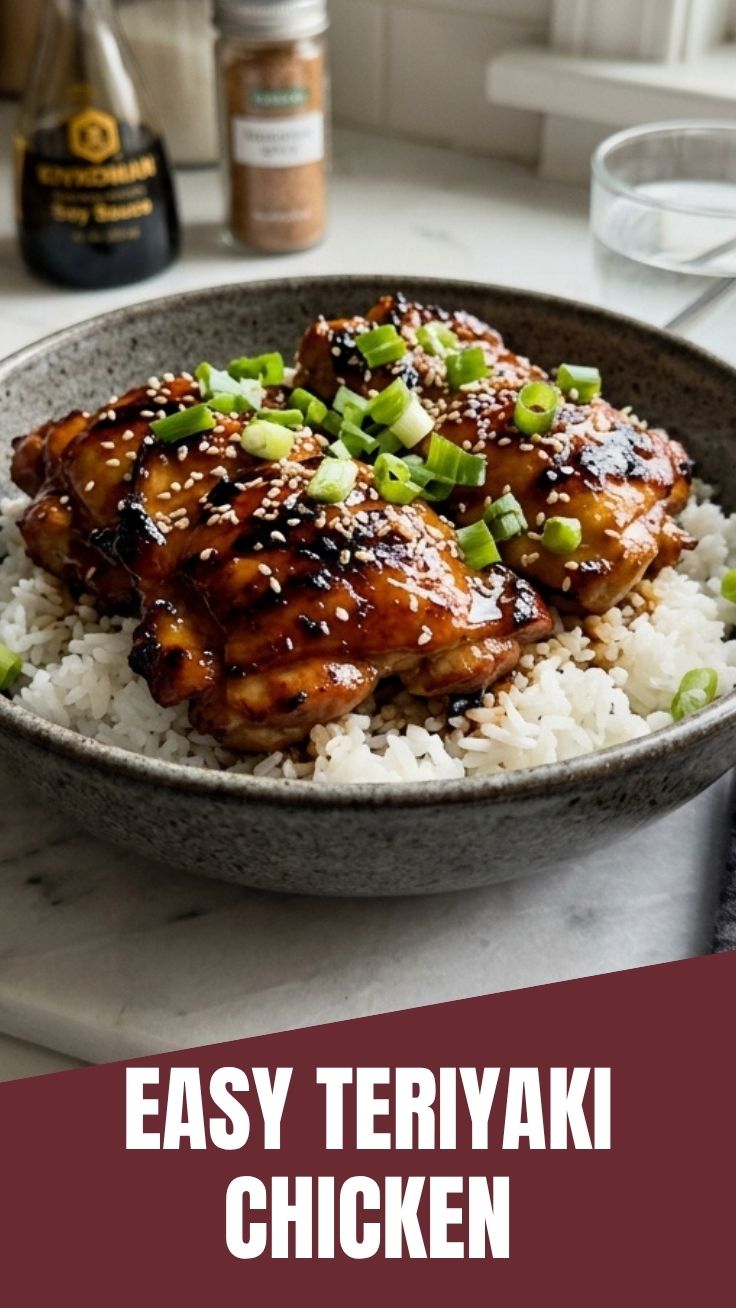
8. Serve: Garnish generously with sliced green onions and toasted sesame seeds. Serve immediately over steamed rice and a side of your favorite vegetables.
Nutritional Benefits & Advantages
Homemade Teriyaki Chicken offers several nutritional advantages. Chicken thighs are a good source of lean protein, essential for muscle repair and growth. By making it yourself, you control the amount of sugar and sodium, allowing you to create a healthier version than many store-bought sauces or restaurant dishes. Fresh ginger and garlic provide anti-inflammatory and antioxidant benefits, while pairing it with vegetables and brown rice turns it into a balanced, fiber-rich meal.
Tips, Variations & Cooking Advice
- Spicy Kick: Add a pinch of red pepper flakes to the sauce for a fiery variation.
- Gluten-Free: Use Tamari instead of regular soy sauce and ensure Mirin is gluten-free.
- Vegetarian Option: Substitute chicken with firm tofu or tempeh, pressed and cubed. Follow the same cooking method.
- Broiling Finish: For an extra crispy glaze, transfer the sauced chicken to a baking sheet and broil for 2-3 minutes until caramelized, watching carefully to prevent burning.
- Flavor Boost: A splash of rice vinegar (1 teaspoon) at the end can brighten the sauce.
Common Mistakes to Avoid
- Overcrowding the Pan: This leads to steaming instead of searing, resulting in pale, less flavorful chicken. Cook in batches if necessary.
- Too High Heat for Sauce: Simmer the sauce gently; high heat can cause it to thicken too quickly or burn.
- Not Patting Chicken Dry: Moisture prevents proper browning. Always pat chicken dry for a beautiful sear.
- Skipping the Slurry: Adding cornstarch directly to a hot liquid will result in lumps. Always dissolve it in cold water first.
Storage & Meal Prep Tips
Leftover Teriyaki Chicken stores beautifully.
- Refrigeration: Store in an airtight container in the refrigerator for up to 3-4 days.
- Freezing: For longer storage, freeze in an airtight container for up to 2-3 months. Thaw overnight in the refrigerator before reheating.
- Reheating: Gently reheat in a skillet over medium-low heat, or in the microwave. Add a tablespoon of water or chicken broth if the sauce seems too thick.
Conclusion
You now possess the blueprint for creating truly exceptional homemade Teriyaki Chicken. This recipe isn’t just about combining ingredients; it’s about understanding the synergy of flavors, the magic of a perfect glaze, and the satisfaction of a meal made with care. So go ahead, don’t hesitate to dive into the rich world of Japanese recipes and try this dish. Share your results, experiment with variations, and enjoy the delicious fruits of your culinary labor!
FAQs
Q1: Can I use chicken breast instead of thighs?
A1: Yes, you can. However, chicken breast is leaner and can dry out more easily. Cut into similar-sized pieces and watch the cooking time carefully to prevent overcooking.
Q2: What can I use if I don’t have Mirin?
A2: While Mirin offers a unique sweetness, a dry sherry or sake with a pinch of sugar can serve as an emergency substitute. The flavor profile will be slightly different, but still delicious.
Q3: How can I make the sauce spicier?
A3: Add 1/4 to 1/2 teaspoon of red pepper flakes to the sauce mixture, or a dash of sriracha at the end for an extra kick.
Q4: My sauce didn’t thicken. What went wrong?
A4: Ensure your cornstarch slurry was fully mixed and that the sauce came to a gentle simmer while stirring. If it’s still too thin, mix another small cornstarch slurry and whisk it in gradually.
Q5: What are good side dishes for Teriyaki Chicken?
A5: Steamed white or brown rice, stir-fried vegetables (broccoli, bell peppers, snow peas), a simple cucumber salad, or a side of edamame all pair wonderfully.