Master the Art of Melt-in-Your-Mouth Brisket at Home
Ever dreamed of replicating that legendary, fall-apart tender Smoked Brisket experience right in your own backyard? The allure of perfectly slow-cooked meat, infused with smoky flavors, often feels like a secret reserved for seasoned pitmasters. But what if I told you that achieving that genuine Texas BBQ taste at home is not only possible but incredibly rewarding? This comprehensive guide will demystify the process, empowering even novice cooks to create a show-stopping Smoked Brisket that will impress friends and family alike. Preparing this culinary masterpiece yourself offers unparalleled satisfaction, allowing you to control every aspect of the flavor profile, from the smoky char to the tender, juicy interior. Let’s embark on this delicious journey together and discover the joy of homemade BBQ.
Ingredients & Kitchen Tools
Crafting the perfect Smoked Brisket requires a few essential items. Here’s what you’ll need:
Ingredients:
- 1 whole packer brisket (10-15 lbs): Look for a good fat cap for moisture and flavor. USDA Prime or Choice is recommended.
- 1/2 cup coarse salt (Kosher or sea salt): Essential for a good bark and seasoning.
- 1/2 cup coarse black pepper: Provides pungency and another key component of the bark.
- 1/4 cup granulated garlic: Adds a savory depth.
- 1/4 cup onion powder: Complements the garlic and enhances flavor.
- Optional binders: Yellow mustard or hot sauce (1-2 tablespoons) – helps the rub adhere to the meat.
- Hardwood chunks or splits: Oak, hickory, or pecan are classic choices for Texas BBQ. Avoid mesquite which can be overpowering.
- Water or beef broth for spritzing: Keeps the surface moist and encourages smoke absorption.
Kitchen Tools & Equipment:
- Smoker (Pellet, offset, or electric): The heart of your operation, capable of maintaining low, consistent temperatures.
- Meat thermometer: Crucial for monitoring internal temperature and ensuring doneness. A two-probe thermometer (one for ambient, one for meat) is ideal.
- Large roasting pan or foil pan: For the “Texas Crutch” (wrapping during the stall).
- Heavy-duty aluminum foil or butcher paper: For wrapping. Butcher paper allows for a crispier bark.
- Sharp boning knife or chef’s knife: For trimming the brisket.
- Cutting board: A large, stable surface.
- Spray bottle: For spritzing.
- Heat-resistant gloves: For handling hot brisket.
Prep Time & Cooking Schedule
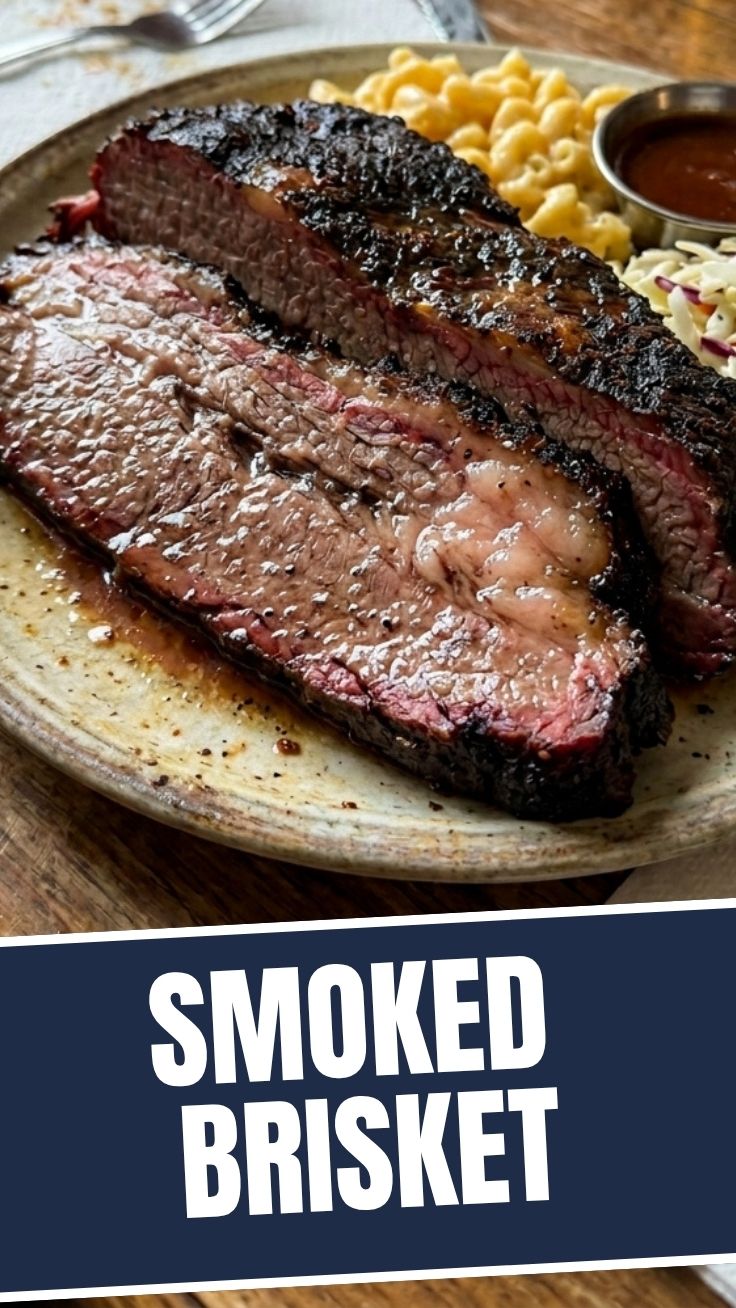
Patience is a virtue when it comes to brisket. Here’s a typical timeline:
- Prep Time: 30-60 minutes (trimming, seasoning)
- Smoking Time: 10-16 hours (depending on brisket size and smoker temp) – budget 1.5 hours per pound at 250°F.
- Resting Time: 2-4 hours – Crucial! Do not skip this.
- Total Time: 13-20 hours
Context: Brisket is an all-day (and sometimes overnight) commitment. Start early, ideally the day before you plan to serve, to allow ample rest time. A good rule of thumb is to allow 18 hours from beginning to end for a 12lb brisket to ensure a stress-free outcome.
Step-by-Step Instructions
1. Trim the Brisket: Using a sharp knife, trim the hard, thick fat (deckle) from the flat and remove any thin, wispy fat. Shave the fat cap down to about 1/4 to 1/2 inch thick, leaving enough to render and self-baste. Shape the brisket to be aerodynamic for even cooking.
2. Season the Brisket: In a bowl, combine salt, pepper, garlic powder, and onion powder to create your rub. If using, spread a thin layer of mustard or hot sauce on the brisket before liberally applying the rub, ensuring all sides are covered. Let it sit at room temperature for an hour, or refrigerate overnight for deeper flavor.
3. Preheat Your Smoker: Get your smoker to a stable temperature of 225-275°F (250°F is a common sweet spot). Add your wood chunks/splits for smoke production.
4. Smoke the Brisket (Phase 1 – Unwrapped): Place the brisket fat side up (or towards the primary heat source) in your smoker. Maintain consistent temperature and smoke. Spritz the brisket every 1-2 hours after the bark has set (usually 4-6 hours in) to keep it moist. Continue smoking until the internal temperature reaches 160-170°F. This is often when the “stall” occurs, where evaporative cooling slows the temperature rise.
5. The “Texas Crutch” (Wrapping): Once the brisket hits the stall (160-170°F), remove it from the smoker and wrap it tightly in butcher paper or heavy-duty aluminum foil. You can add a splash of beef broth or apple cider vinegar inside the wrap. This helps power through the stall, tenderizes the meat, and keeps it moist. Return the wrapped Smoked Brisket to the smoker.
6. Smoke the Brisket (Phase 2 – Wrapped): Continue cooking until the internal temperature reaches 200-205°F and, most importantly, feels “probe tender.” This means a thermometer probe should slide into the meat with very little resistance, like it’s going into soft butter. This probe tenderness is the true indicator of doneness for perfectly tender Texas BBQ.
7. Rest the Brisket: This is arguably the most crucial step! Once probe tender, remove the wrapped brisket from the smoker and place it in an insulated cooler (without ice) for at least 2 hours, and preferably 3-4 hours. This allows the fibers to relax, redistributing the juices and resulting in an incredibly moist and tender final product.
8. Slice and Serve: After resting, unwrap the brisket. Separate the point and the flat if desired. Always slice against the grain! The grain often runs in different directions in the point and flat, so pay attention. Serve immediately and enjoy the fruits of your labor!
Nutritional Benefits & Advantages
Beyond its incredible taste, brisket can offer some nutritional advantages. Beef brisket is a good source of protein, essential for muscle building and repair. It also provides B vitamins, iron, and zinc. While it does contain saturated fat, trimming the excess can help reduce its overall fat content. Smoking, as a cooking method, also avoids adding extra unhealthy fats often associated with frying.
Tips, Variations & Cooking Advice
- Wood Choice: Experiment with different woods. Oak provides a classic, strong smoke, hickory is a bit sweeter, and pecan offers a milder, nutty flavor.
- Rub Variations: While salt and pepper are king for Texas-style, feel free to add a touch of brown sugar for sweetness, paprika for color, or a pinch of cayenne for heat.
- Spritz Liquid: Instead of just water, try a 50/50 mix of apple cider vinegar and water, or beef broth for added flavor.
- Maintaining Temperature: A stable smoker temperature is key. Avoid frequently opening the lid, as this causes temperature fluctuations. Trust your thermometer.
- The Stall: Don’t panic during the stall! It’s a natural phenomenon. The “Texas Crutch” is your friend here.
Common Mistakes to Avoid
- Not Trimming Properly: Too much fat can be greasy; too little results in dry brisket.
- Rushing the Cook: Undercooked brisket will be tough and chewy.
- Not Resting: This is the most common mistake! Skipping the rest leads to dry, less flavorful meat.
- Over-Trimming the Fat Cap: The fat helps keep the brisket moist and provides flavor.
- Slicing with the Grain: This will make even the most perfectly cooked brisket tough. Always slice against the grain.
Storage & Meal Prep Tips
- Refrigeration: Leftover Smoked Brisket should be sliced or kept in larger chunks and stored in an airtight container in the refrigerator for up to 3-4 days.
- Freezing: For longer storage, slice the brisket and freeze flat in vacuum-sealed bags or heavy-duty freezer bags for up to 3 months.
- Reheating: To maintain moisture, reheat gently. Wrap slices in foil with a splash of beef broth and warm in an oven at 250-300°F until heated through (about 20-30 minutes). You can also use a microwave, but be careful not to overcook.
Conclusion
Mastering the art of Smoked Brisket might seem daunting, but armed with patience, good technique, and the right tools, you can achieve spectacular results at home. From the careful trimming and robust seasoning to the slow smoke and crucial resting period, every step contributes to that unforgettable, melt-in-your-mouth flavor that defines great Texas BBQ. Don’t be afraid to experiment, learn from each cook, and most importantly, enjoy the process. Give this recipe a try, share your triumph with us, and savor the smoky goodness!
FAQs
Q1: How do I know when my brisket is perfectly done?
A1: While internal temperature is a guide (200-205°F), the most reliable indicator is “probe tenderness.” A thermometer probe or skewer should effortlessly glide into the thickest part of the meat with minimal resistance.
Q2: My brisket hit the “stall” and isn’t increasing in temperature. What should I do?
A2: This is normal! The stall occurs due to evaporative cooling. This is the perfect time to wrap your brisket in butcher paper or foil (the “Texas Crutch”) to push through it and retain moisture.
Q3: Can I cook a smaller brisket?
A3: Yes, you can cook a smaller piece of brisket (e.g., just the flat or point), but adjust cooking times accordingly. The principles of trimming, seasoning, smoking, and resting remain the same.
Q4: What if I don’t have a dedicated smoker?
A4: You can adapt this for a charcoal grill by setting it up for indirect heat with wood chunks, or even a gas grill using a smoke box. Just ensure you can maintain a consistent low temperature and generate good smoke.
Q5: What’s the best way to slice brisket?
A5: Always slice the brisket against the grain. The grain in the point and flat often runs in different directions, so identify it correctly in both sections to ensure maximum tenderness.