Master the Art of the Perfect Roast Turkey: Your Ultimate Guide
Ever wondered how to achieve that show-stopping, golden-brown Roast Turkey that graces magazine covers and holiday tables? There’s a certain magic to a perfectly cooked turkey, a blend of tradition, flavor, and culinary artistry. Preparing your own roast turkey at home isn’t just about saving money; it’s about crafting an unforgettable centerpiece, infusing your kitchen with incredible aromas, and creating cherished memories with loved ones. Skip the pre-made versions and embrace the satisfaction of a homemade roast turkey recipe that will impress even the most discerning palates.
Ingredients & Kitchen Tools
To embark on your roast turkey journey, gather these essentials. Each item plays a crucial role in bringing your culinary vision to life.
- 1 (12-14 lb) Whole Turkey: Opt for a fresh, natural turkey for the best flavor and texture. Thaw completely if frozen.
- 1/2 cup Unsalted Butter, softened: Essential for crisp skin and rich flavor.
- 2 tbsp Fresh Rosemary, chopped: Aromatic herb that complements poultry beautifully.
- 2 tbsp Fresh Thyme, chopped: Another classic herb for turkey, adding depth.
- 1 Lemon, quartered: Adds brightness and helps to tenderize the meat.
- 1 Large Onion, quartered: Contributes aromatic steam and flavor to the pan drippings.
- 4-6 Cloves Garlic, smashed: Infuses the turkey with a pungent, savory aroma.
- 2 cups Chicken or Vegetable Broth: Provides moisture and creates delicious pan drippings for gravy.
- Salt and Freshly Ground Black Pepper: Season generously, layering flavor throughout.
- Roasting Pan with Rack: Crucial for even circulation of heat and preventing the bottom from burning.
- Meat Thermometer: Non-negotiable for ensuring internal temperature safety and preventing overcooking.
- Basting Brush: For applying butter and drippings, keeping the turkey moist.
- Kitchen Twine: To tie the legs together for a more compact and even roast.
Prep Time & Cooking Schedule
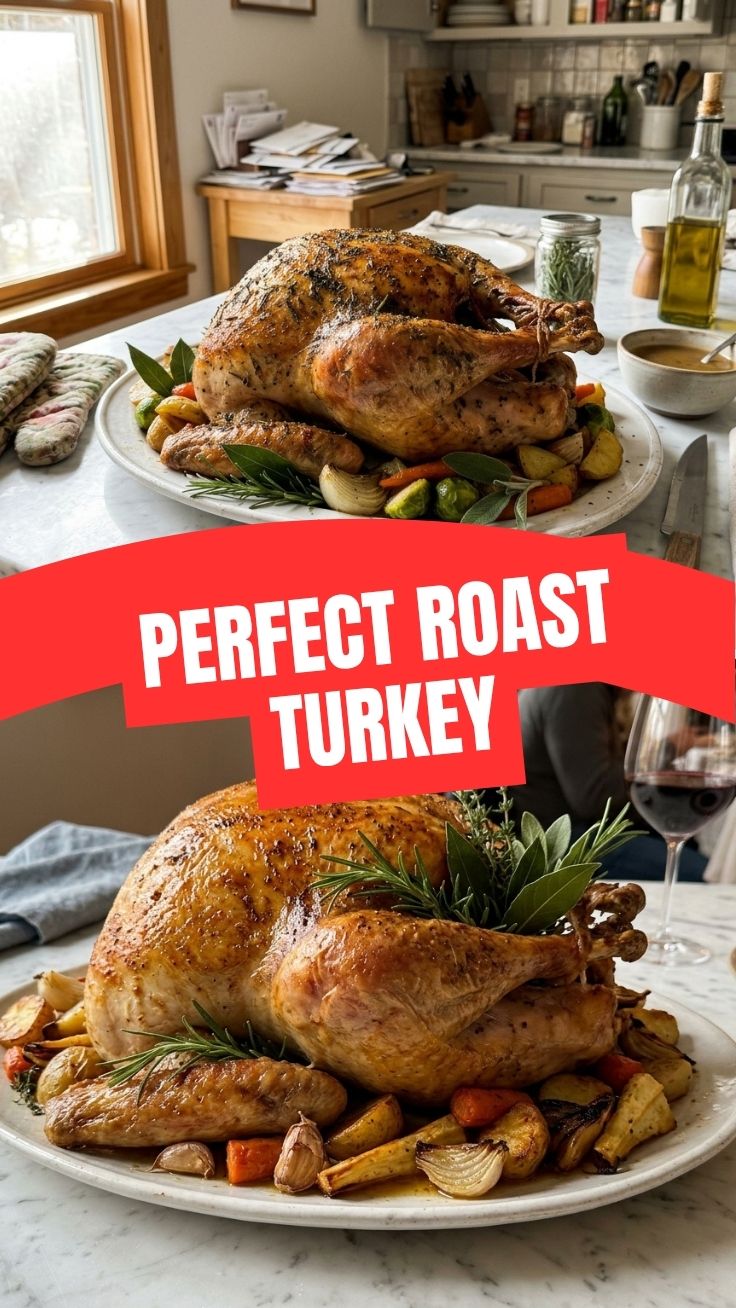
Planning is key for a stress-free turkey experience. Here’s a typical timeline:
- Prep Time: 30-45 minutes (includes thawing, seasoning, and stuffing)
- Cooking Time: Approximately 2.5-3.5 hours for a 12-14 lb turkey (roughly 13-15 minutes per pound at 325°F).
- Resting Time: 20-30 minutes (crucial for juicy results!)
Remember to factor in thawing time if your turkey is frozen – typically 24 hours for every 5 pounds in the refrigerator. Start thawing several days in advance!
Step-by-Step Instructions
Follow these steps for a glorious Roast Turkey that will be the talk of the table. Achieving a perfectly succulent bird with a crispy skin doesn’t have to be daunting.
1. Prepare the Turkey: Remove the turkey from its packaging. Remove the giblets and neck from the cavity (reserve for gravy if desired). Pat the turkey thoroughly dry with paper towels – this is critical for crispy skin!
2. Seasoning: In a small bowl, combine softened butter, chopped rosemary, thyme, salt, and pepper. Gently loosen the skin over the breast and thighs, and rub about two-thirds of the butter mixture directly onto the meat under the skin. Rub the remaining butter mixture all over the outside of the turkey.
3. Aromatics: Place the quartered lemon, onion, and smashed garlic cloves inside the turkey cavity. Tie the legs together with kitchen twine.
4. Roasting: Place the turkey on the rack in your roasting pan. Pour broth into the bottom of the pan.
5. Initial Roast: Preheat oven to 425°F (220°C). Roast for 30 minutes to get a good initial browning.
6. Lower Temperature & Continue: Reduce the oven temperature to 325°F (160°C). Continue roasting, basting every 30-45 minutes with pan juices, until a meat thermometer inserted into the thickest part of the thigh (without touching bone) reads 165°F (74°C). If the skin is browning too quickly, loosely tent with foil.
7. Resting: Once cooked, carefully remove the turkey from the oven. Transfer it to a large cutting board and tent it loosely with foil. Let it rest for at least 20-30 minutes before carving. This critical step allows the juices to redistribute, ensuring a tender and moist roast turkey recipe.
Nutritional Benefits & Advantages
Turkey is a powerhouse of nutrition! It’s an excellent source of lean protein, essential for muscle repair and growth. It’s also rich in B vitamins (especially B6 and B12), which are vital for energy metabolism and nervous system function. Furthermore, turkey provides selenium, an antioxidant that supports immune health, and zinc, crucial for wound healing and immune response. Choosing a homemade roast turkey allows you to control the ingredients, avoiding excessive sodium or unhealthy fats often found in store-bought alternatives.
Tips, Variations & Cooking Advice
- Brining: For an extra juicy turkey, consider brining it overnight. A simple salt, sugar, and herb brine can make a world of difference.
- Herbs: Experiment with other herbs like sage, oregano, or marjoram for different flavor profiles.
- Citrus: Oranges or limes can be used in the cavity instead of lemon for a different tangy note.
- Compound Butter: Get creative with your butter mixture by adding orange zest, smoked paprika, or a pinch of cayenne for heat.
- Gravy: Don’t discard those pan drippings! They are the base for an incredibly flavorful homemade gravy.
- Stuffing: If you plan to stuff your turkey, ensure the stuffing reaches an internal temperature of 165°F (74°C) to prevent foodborne illness. Many prefer to bake stuffing separately.
Common Mistakes to Avoid
- Not Thawing Properly: A partially frozen turkey will cook unevenly and take much longer.
- Overcooking: The biggest culprit of dry turkey. Always use a meat thermometer!
- Not Patting Dry: Moisture on the skin prevents it from becoming crispy.
- Not Resting: Carving too soon allows all the precious juices to run out, resulting in dry meat.
- Forgetting to Remove Giblets: While not dangerous, it’s certainly an unpleasant surprise!
Storage & Meal Prep Tips
Leftover turkey is a gift that keeps on giving!
- Refrigeration: Carve off all the meat from the bones and store it in airtight containers in the refrigerator for up to 3-4 days.
- Freezing: For longer storage, freeze cooked turkey in airtight containers or freezer bags for 2-3 months.
- Reheating: To maintain moisture, gently reheat turkey in the oven or microwave with a splash of broth. Leftover turkey is fantastic in sandwiches, salads, soups, or casseroles.
Conclusion
Mastering the art of the perfect Roast Turkey is a rewarding culinary achievement that brings joy to any gathering. With proper planning, a precise hand, and the right techniques, you can achieve a tender, juicy bird with beautifully crisp skin every time. We hope this comprehensive guide inspires you to tackle this classic dish with confidence. Give this roast turkey recipe a try and let us know your results! Share your tips, variations, and feast photos in the comments below – happy roasting!
FAQs
Q1: How do I prevent my turkey breast from drying out?
A1: The most effective ways are to brine the turkey, rub butter under the skin over the breast, and tent it with foil if it’s browning too quickly. Most importantly, avoid overcooking by using a meat thermometer and removing the turkey promptly once it reaches 165°F.
Q2: Can I prepare the turkey the day before?
A2: You can season the turkey with salt and pepper the day before and keep it uncovered in the refrigerator. This allows the salt to penetrate the meat, enhancing flavor and moisture retention. However, do not add butter or other herbs until just before roasting.
Q3: What if I don’t have a roasting rack?
A3: You can create a makeshift rack by rolling up aluminum foil into several thick ropes and placing them across the bottom of the roasting pan, forming a platform for the turkey. Alternatively, you can use large, roughly chopped vegetables (like carrots, celery, and onions) to elevate the turkey.
Q4: How much turkey do I need per person?
A4: A good rule of thumb is to calculate 1.5 pounds of turkey per person, especially if you want leftovers. If you anticipate heavy eaters or fewer sides, lean towards 2 pounds per person.