Unlocking Mediterranean Sunshine: Your Guide to the Perfect Homemade Greek Salad
Tired of salads that leave you wanting more? Imagine a vibrant, flavourful dish that bursts with the fresh taste of the Mediterranean, all crafted in your own kitchen. Today, we’re diving into the world of the quintessential Greek Salad – a culinary masterpiece that’s not only delicious but incredibly simple to prepare. Forget limp lettuce and bland dressings; this isn’t just about combining ingredients, it’s about creating an experience. And for those seeking a truly authentic experience, mastering the Greek Salad Recipe at home offers undeniable value, allowing you to control the quality of every ingredient and tailor it to your exact preferences. Get ready to elevate your meal prep and impress your taste buds with this fresh, wholesome classic.
Ingredients & Kitchen Tools
- Ripe Tomatoes (2-3 large, preferably Roma or Beefsteak): The star of the show. Look for firmness and a vibrant red color.
- Cucumber (1 large, English or Persian): English cucumbers are less watery and have fewer seeds.
- Red Onion (1/2 medium): Adds a sharp, piquant kick. Slice thinly for best results.
- Kalamata Olives (1/2 cup, pitted): Essential for that briny, earthy flavor. Opt for good quality, whole olives.
- Feta Cheese (4 oz block, not pre-crumbled): The heart of the salad. Crumbled feta often lacks the creaminess and authentic texture.
- Green Bell Pepper (1, medium): Adds a subtle sweetness and crunch.
- Extra Virgin Olive Oil (1/4 cup): A high-quality oil is crucial for the dressing.
- Red Wine Vinegar (2 tbsp): Provides the necessary tang and acidity.
- Dried Oregano (1 tsp): The signature herb of Greek cuisine.
- Salt & Freshly Ground Black Pepper (to taste): Season generously but adjust for the saltiness of feta and olives.
Kitchen Tools:
- Large Mixing Bowl: For tossing all ingredients.
- Sharp Knife: Essential for precise chopping and slicing.
- Cutting Board: A stable surface for safe ingredient preparation.
- Whisk or Fork: For emulsifying the dressing. Measuring Cups & Spoons: For accurate ingredient measurement.
Prep Time & Cooking Schedule
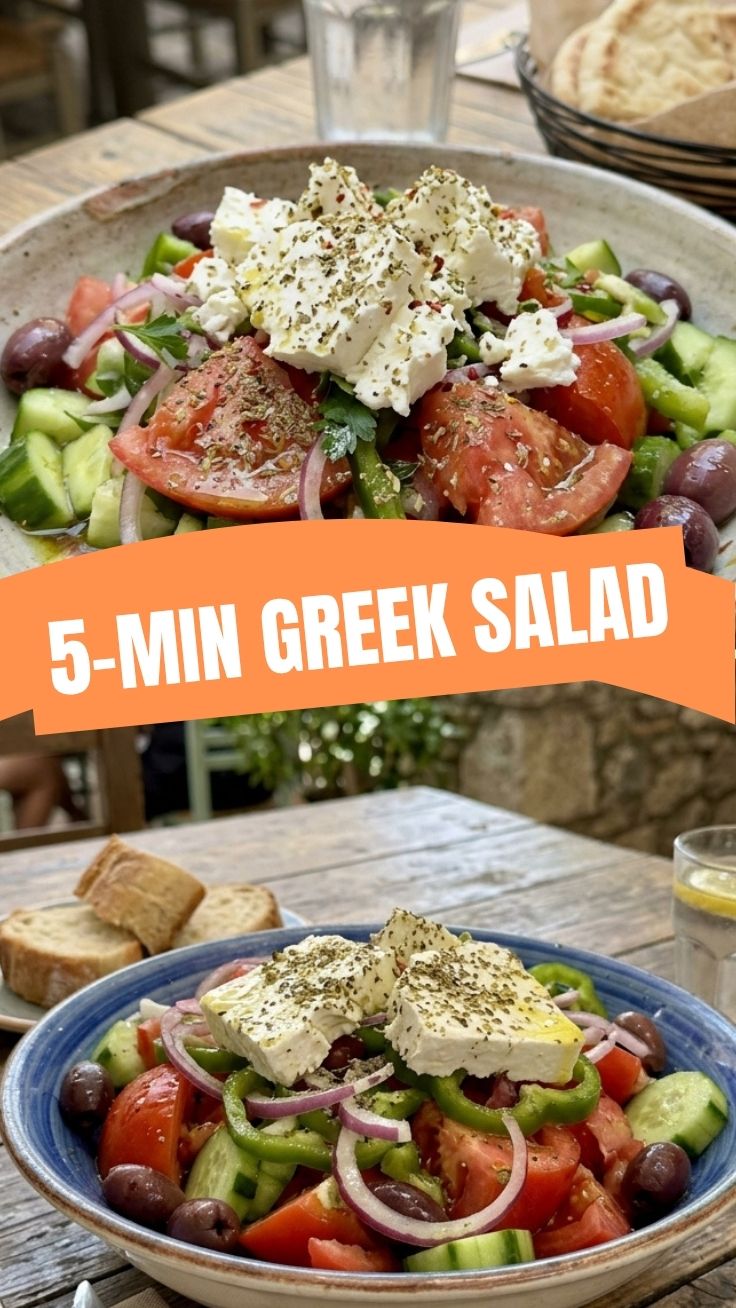
This Greek Salad is celebrated for its quick preparation.
- Prep Time: 15-20 minutes
- Resting Time: 10-15 minutes (optional, but recommended to allow flavors to meld)
There’s no cooking involved, making it a perfect no-fuss option for lunch or a side dish. Allowing the salad to rest briefly before serving helps the vegetables absorb the vibrant dressing, enhancing the overall flavor profile.
Step-by-Step Instructions
1. Prepare the Vegetables: Wash and thoroughly dry all your produce. Dice the tomatoes into bite-sized pieces. Halve the cucumber lengthwise, scoop out the seeds if desired (especially for standard cucumbers), and then slice into half-moons. Core and deseed the green bell pepper, then cut it into thin strips or small dice. Thinly slice the red onion into rings or half-moons. Combine all these prepared vegetables in your large mixing bowl.
2. Add the Olives and Feta: Scatter the pitted Kalamata olives over the vegetables. Next, crumble the block of feta cheese directly over the salad. This ensures a more authentic texture and distributes the savory, briny goodness evenly. For a truly satisfying Greek Salad, resist the urge to pre-crumble the feta.
3. Whisk the Dressing: In a small bowl, combine the extra virgin olive oil, red wine vinegar, and dried oregano. Season with a pinch of salt and black pepper. Whisk vigorously until well combined and slightly emulsified. Taste and adjust seasonings as needed – you might want a little more vinegar for tang or a touch more salt. This simple yet crucial step brings the entire Greek Salad Recipe to life.
4. Dress and Toss: Pour the prepared dressing over the ingredients in the large mixing bowl. Gently toss everything together using large spoons or salad tongs, ensuring all vegetables and feta are lightly coated with the dressing. Try not to over-mix, as this can make the tomatoes watery.
5. Serve Immediately or Rest: Serve your homemade Greek Salad immediately for maximum freshness and crunch. If time permits, letting it rest for 10-15 minutes allows the flavors to truly mingle and deepen.
Nutritional Benefits & Advantages
This Greek Salad is a powerhouse of nutrition. Tomatoes are rich in lycopene, a powerful antioxidant. Cucumbers provide hydration and contribute to skin health. Red onions contain quercetin, an anti-inflammatory compound. Kalamata olives are a source of healthy monounsaturated fats. Feta cheese offers calcium and protein. The extra virgin olive oil, a cornerstone of the Mediterranean diet, is known for its heart-healthy fats and anti-inflammatory properties. This salad is naturally gluten-free and can be a fantastic low-carb option, making it an excellent choice for a balanced and wholesome meal.
Tips, Variations & Cooking Advice
- Add a Protein: For a more substantial meal, consider adding grilled chicken, shrimp, or chickpeas (as seen in some inventive Greek Salad Recipe variations) to your salad.
- Herb Power: While oregano is traditional, fresh mint or dill can add an interesting aromatic twist.
- Spice it up (mildly): A pinch of red pepper flakes in the dressing can give a subtle warmth.
- Lemon Zest: For an extra burst of brightness, add a little lemon zest to your dressing.
- Portion Control: This recipe scales easily; simply adjust ingredient quantities based on how many servings you need.
- Dairy-Free Option: For a dairy-free version, omit the feta or use a plant-based feta alternative.
Common Mistakes to Avoid
- Pre-crumbled Feta: Avoid pre-crumbled feta, as it often has additives and lacks the creamy texture of a block. Crushing it yourself is key.
- Over-Dressing: Start with a conservative amount of dressing and add more if needed. You want to coat the ingredients, not drown them.
- Too Much Salt: Feta cheese and Kalamata olives are already salty, so taste before adding extra salt to the dressing.
- Skipping the Rest (optional): If you have the time, letting the salad rest briefly allows the flavors to meld beautifully.
- Cutting Too Small: Aim for rustic, chunky cuts for the vegetables to give the salad a substantial texture.
Storage & Meal Prep Tips
This Greek Salad is best enjoyed fresh. However, if you have leftovers, store them in an airtight container in the refrigerator for up to 1-2 days. Be aware that the vegetables, especially the tomatoes and cucumbers, will release more water over time, potentially making the salad a bit soggy.
For meal prep, you can chop all the vegetables (except tomatoes) and store them separately in individual containers. Keep the feta crumbled in its own container, and prepare the dressing in a small jar. Assemble just before serving to maintain optimal freshness and texture. Adding tomatoes right before serving also helps minimize sogginess.
Conclusion
Crafting your own Greek Salad at home is a rewarding experience, bringing truly fresh and authentic Mediterranean flavors to your table. This vibrant dish, with its crisp vegetables, briny olives, creamy feta, and zesty dressing, is a testament to the beauty of simple, high-quality ingredients. We hope this comprehensive guide inspires you to whip up this delightful salad. Don’t hesitate to share your creations and any personal twists you add to this classic Greek Salad Recipe!
FAQs
1. Can I use any type of olive? While Kalamata olives are traditional, you can experiment with other briny olives like Gaeta or even large green olives for a different flavor profile.
2. How long does Greek Salad last in the fridge? Ideally, consume within 1-2 days. The vegetables will soften and release water if stored longer.
3. What if I don’t like red onion? If red onion is too strong for you, try soaking the slices in a bowl of ice water for 10-15 minutes before adding them to the salad. This mellows their flavor significantly.
4. Can I add leafy greens? Traditionally, a true Greek Salad (Horiatiki) does not include lettuce. However, for a heartier meal, you can certainly add a bed of crisp romaine or mixed greens.
5. Is this recipe good for weight loss? Yes, this salad is naturally low in calories and rich in nutrients, making it an excellent choice for a healthy eating plan, especially when portion controlled.