Unveiling the Sunshine: Your Guide to a Perfect Homemade Greek Salad
Tired of lacklustre lunches and uninspired dinners? Imagine a dish bursting with vibrant colours, fresh flavours, and the undeniable aroma of the Mediterranean. That’s the promise of a homemade Greek Salad. Beyond its tantalizing taste, crafting this culinary gem in your own kitchen offers unparalleled freshness and control over ingredients, ensuring every bite is a symphony of authentic flavours. This comprehensive guide will walk you through creating a stunning Greek Salad, whether you’re a seasoned chef or a kitchen novice. Get ready to transform your meals with this wholesome Mediterranean delight!
Ingredients & Kitchen Tools
Here’s everything you’ll need to bring this vibrant salad to life:
- Ripe Tomatoes (2-3 medium): Cherry or plum tomatoes work wonderfully for sweetness and juiciness.
- Cucumber (1 large): English or Persian cucumbers are seedless and have thinner skins, perfect for a crisp texture.
- Red Onion (1/2 small): Sliced thinly to add a pungent, slightly sweet crunch.
- Kalamata Olives (1/2 cup): Pitted for convenience, these add a briny, savoury depth.
- Feta Cheese (4 oz block): Opt for a block of feta in brine for authentic flavour and crumbly texture, rather than pre-crumbled.
- Green Bell Pepper (1 medium): Adds a mild, refreshing crunch.
- Extra Virgin Olive Oil (1/4 cup): High quality is key for the dressing; embrace its fruity, peppery notes.
- Red Wine Vinegar (2 tbsp): Provides the essential tang and acidity.
- Dried Oregano (1 tsp): The quintessential Greek herb, imbues warmth and aromatic complexity.
- Salt & Freshly Ground Black Pepper (to taste): Elevates all other flavours.
Kitchen Tools:
- Large Mixing Bowl: Essential for tossing all ingredients gently.
- Sharp Knife: For precise and clean vegetable cuts.
- Cutting Board: A sturdy surface for safe chopping.
- Whisk or Fork: For emulsifying the dressing ingredients.
Prep Time & Cooking Schedule
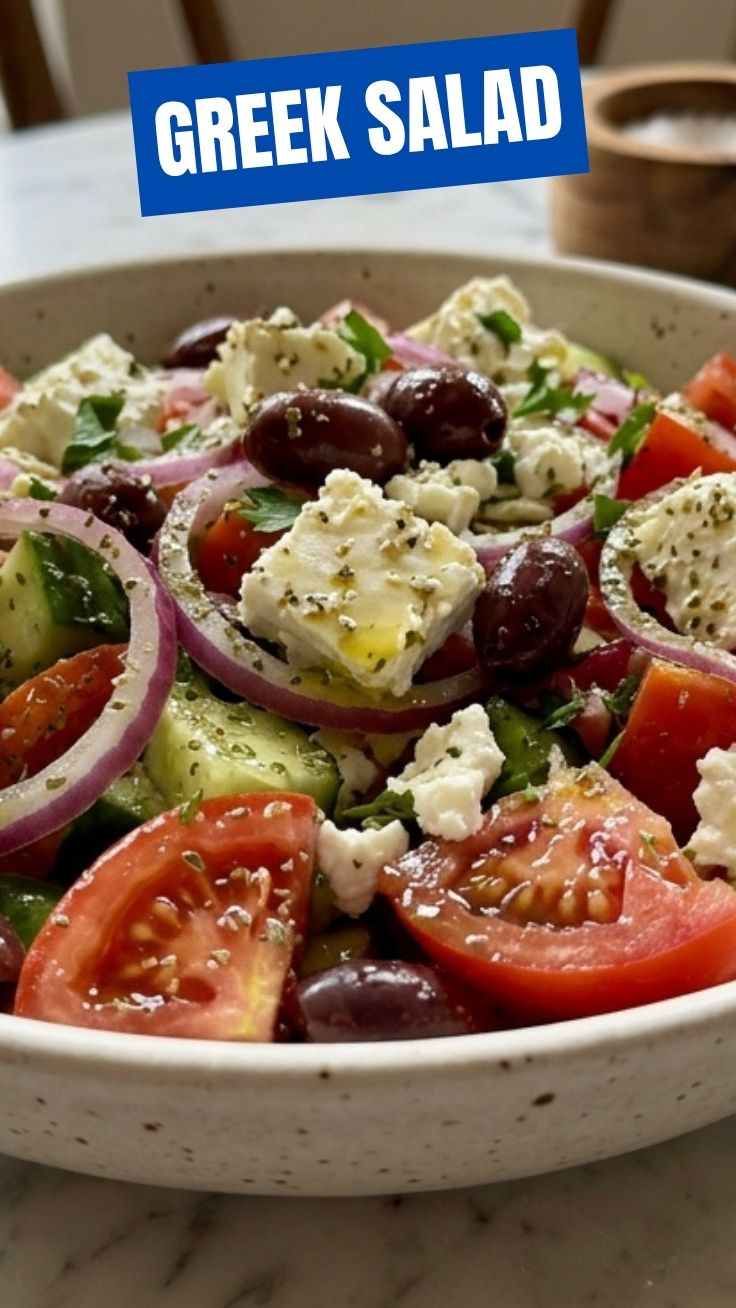
This recipe is blissfully quick, making it perfect for last-minute meals or meal prep.
- Prep Time: 15-20 minutes (mostly chopping!)
- Cook Time: 0 minutes
- Marinating Time (Optional): 15 minutes. While not strictly necessary, allowing the salad to sit for 15 minutes before serving lets the flavours meld beautifully, especially the dressing infusing the vegetables. This short rest time truly enhances the overall experience.
Step-by-Step Instructions
1. Prepare the Vegetables: Wash all your produce thoroughly. Cut the tomatoes into bite-sized wedges or halves. Slice the cucumber into half-moon shapes or chunks. Thinly slice the red onion. Deseed and chop the green bell pepper into similar-sized pieces.
2. Assemble the Salad Base: In your large mixing bowl, combine the chopped tomatoes, cucumbers, red onion, green bell pepper, and Kalamata olives.
3. Crumble the Feta: Gently crumble the block of feta cheese over the vegetables. Avoid pre-crumbled feta if possible, as the block offers superior texture and flavour.
4. Whisk the Dressing: In a small bowl, whisk together the extra virgin olive oil, red wine vinegar, and dried oregano. Season generously with salt and freshly ground black pepper. Taste and adjust seasoning as needed. The dressing should be bright and tangy.
5. Dress and Toss: Pour the prepared dressing over the ingredients in the large mixing bowl. Gently toss everything together, ensuring all the vegetables and feta are lightly coated. Be careful not to over-mix, as you want to maintain the integrity of the a href=”https://homecookedrecipe.com/greek-salad-3/” target=”_blank”>Greek Salad components.
6. Serve: For optimal flavour infusion characteristic of the Mediterranean region, allow the salad to rest for 15 minutes before serving. This allows the dressing to penetrate the vegetables fully.
Nutritional Benefits & Advantages
The Greek Salad is a powerhouse of nutrition, emblematic of the health benefits associated with the Mediterranean diet. Rich in fresh vegetables, it provides a high dose of vitamins (A, C, K), minerals (potassium, manganese), and dietary fiber, promoting digestive health and satiety. The extra virgin olive oil contributes healthy monounsaturated fats, known for their cardiovascular benefits and anti-inflammatory properties. Feta cheese offers calcium and protein, while olives provide beneficial antioxidants. This salad is naturally gluten-free and can be a fantastic low-carb option.
Tips, Variations & Cooking Advice
- Add Protein: For a more substantial meal, add grilled chicken, chickpeas, or canned tuna.
- Herb Variations: Experiment with fresh mint or parsley for an additional layer of freshness.
- Spice It Up: A pinch of red pepper flakes can add a subtle kick.
- Dairy-Free: Omit the feta or use a plant-based feta alternative for a dairy-free version.
- Bulk It Up: Serve over a bed of mixed greens or quinoa for an expanded meal.
- Temperature: Serve chilled for the best refreshing experience.
Common Mistakes to Avoid
- Over-dressing: Start with less dressing and add more if needed. A soggy salad is never appealing.
- Pre-dressing Too Early: If making ahead, keep the dressing separate and toss just before serving to prevent the vegetables from becoming watery.
- Using Subpar Ingredients: The simplicity of this salad demands high-quality, fresh produce and good olive oil. Don’t skimp!
- Skipping the Red Wine Vinegar: This is crucial for the authentic tang. Balsamic vinegar or apple cider vinegar won’t provide the same flavour profile.
- Not Pitting Olives: For ease of eating, always use pitted Kalamata olives.
Storage & Meal Prep Tips
Leftover Greek Salad can be stored in an airtight container in the refrigerator for up to 2-3 days. However, for optimal crispness and flavour, it’s best consumed within 24 hours, especially if dressed. The cucumber tends to soften over time. If you’re meal prepping, store the chopped vegetables and feta separately from the dressing. Combine and toss just before serving to maintain freshness and texture. This salad does not freeze well due to the high water content of the vegetables.
Conclusion
Embracing the simplicity and vibrant flavors of a homemade Greek Salad is more than just making a meal; it’s an invitation to a healthier, more delicious lifestyle inspired by the Mediterranean. With fresh ingredients and easy steps, you can create a culinary masterpiece that’s both nutritious and incredibly satisfying. We encourage you to try this recipe and experience the difference that fresh, home-cooked food can make. Share your creations in the comments below, or let us know your favourite variations!
FAQs
Q1: Can I make this salad ahead of time?
A1: Yes, you can chop all the vegetables and crumble the feta ahead of time and store them separately. Whisk the dressing just before serving and combine everything to ensure maximum freshness.
Q2: What’s the best way to keep the cucumber from getting soggy?
A2: For extra crispness, you can lightly salt the cucumber slices and let them sit for 10-15 minutes, then pat them dry with a paper towel before adding them to the salad. This draws out excess water.
Q3: Can I use different types of olives?
A3: While Kalamata olives are traditional and highly recommended for their distinct flavour, you can experiment with other brined black olives if you prefer a milder taste, though the authentic Greek flavour might be slightly altered.
Q4: Is it possible to make a milder onion flavor?
A4: Absolutely! If raw red onion is too strong for your palate, you can soak the sliced onion in cold water for 10-15 minutes before adding it to the salad. This significantly reduces its pungency.