Unlock the Secret to Restaurant-Quality Pasta at Home: Your Ultimate Guide to Creamy Fettuccine Alfredo
Tired of watery sauces and bland pasta dishes? Imagine creating a rich, velvety Fettuccine Alfredo right in your own kitchen, a dish so exquisitely creamy it rivals your favorite Italian restaurant. This isn’t just about cooking; it’s about transforming simple ingredients into a culinary masterpiece that will impress your family and friends. While many might consider this a complex dish, we’re here to show you how effortlessly you can achieve perfection, including tips to elevate other classic pasta dishes like Pasta Carbonara. Mastering homemade Fettuccine Alfredo offers not only the satisfaction of a delicious meal but also control over the quality of your ingredients and a delightful, personalized dining experience.
Ingredients & Kitchen Tools
To embark on your creamy pasta journey, gather these essentials:
- 1 lb Fettuccine Pasta: The classic choice for its broad, flat surface, perfect for clinging to the rich sauce. (Substitute: Linguine or even spaghetti if fettuccine isn’t available.)
- 1 cup (2 sticks) Unsalted Butter: The foundation of the Alfredo sauce, contributing richness and a silky texture. (Clarification: Unsalted allows you to control the seasoning.)
- 2 cups Heavy Cream: The key to achieving that luxurious, velvety consistency. (Clarification: Avoid half-and-half; it won’t yield the same richness.)
- 2 cups Freshly Grated Parmesan Cheese: (Parmigiano-Reggiano is preferred) Essential for its sharp, salty, and nutty flavor that defines Alfredo. (Clarification: Grate it yourself; pre-grated often contains anti-caking agents that affect melting.)
- 2-3 cloves Garlic, minced: Adds an aromatic depth to the sauce. (Clarification: Adjust to your preference; a little goes a long way.)
- Salt and Freshly Ground Black Pepper to taste: Crucial for balancing the flavors. (Clarification: Season generously, but taste as you go.)
- Fresh Parsley, chopped (for garnish): Adds a touch of freshness and color. (Optional)
- Large Pot: For cooking the fettuccine.
- Large Skillet or Sauté Pan: To prepare the Alfredo sauce.
- Whisk: For emulsifying the sauce.
- Tongs: For tossing the pasta with the sauce.
- Grater: If you’re grating your own Parmesan.
Prep Time & Cooking Schedule
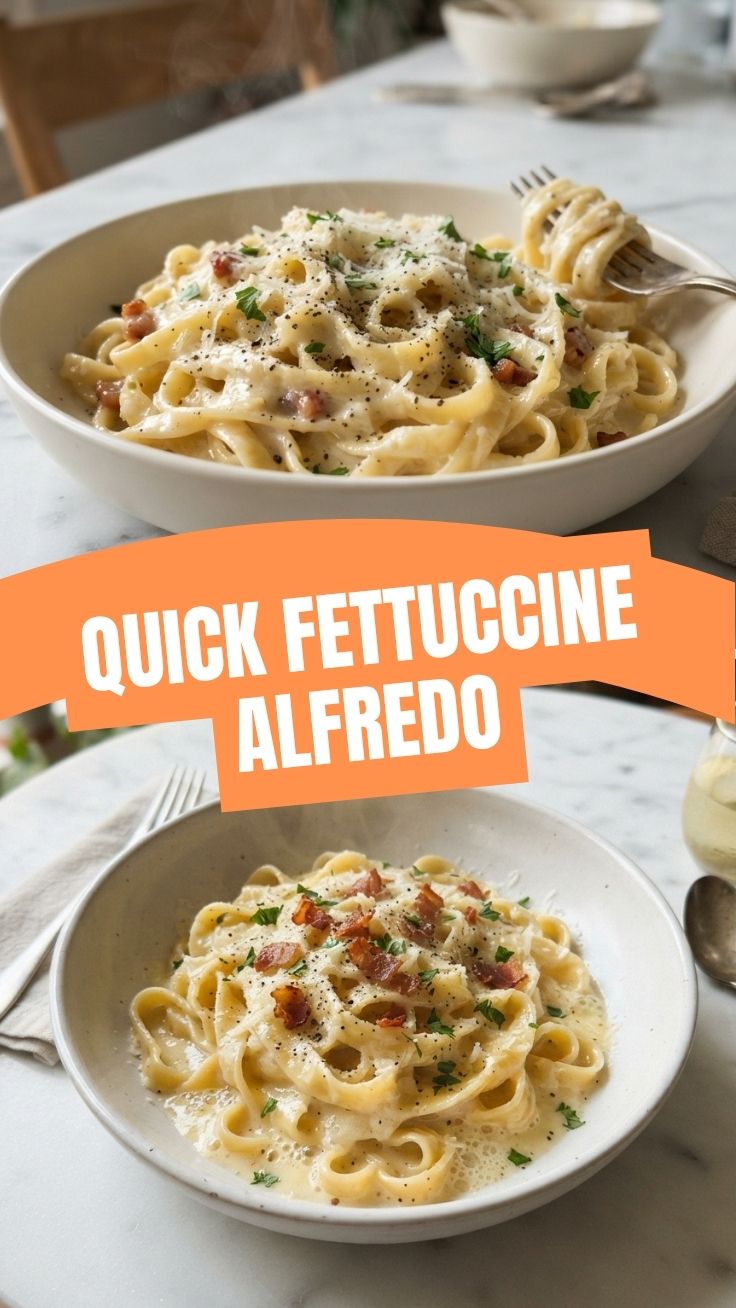
This delightful dish comes together surprisingly quickly!
- Prep Time: 10 minutes (Minced garlic, grated cheese)
- Cook Time: 20-25 minutes (Pasta cooking + sauce preparation)
- Total Time: Approximately 30-35 minutes
Plan to start your pasta water boiling as you begin preparing the sauce. The key is to have the sauce ready just as the pasta finishes cooking, ensuring everything is served hot and fresh. There’s no resting or marinating time required for this recipe, making it perfect for a weeknight indulgence.
Step-by-Step Instructions
1. Cook the Fettuccine: Bring a large pot of generously salted water to a rolling boil. Add the fettuccine and cook according to package directions until al dente. Before draining, reserve about 1 cup of the starchy pasta water. This will be your secret weapon for achieving the perfect sauce consistency.
2. Melt the Butter: While the pasta cooks, in a large skillet or sauté pan over medium heat, melt the butter.
3. Sauté Garlic: Add the minced garlic to the melted butter and sauté for about 1 minute, until fragrant. Be careful not to burn it.
4. Add Cream: Pour in the heavy cream and bring it to a gentle simmer, stirring occasionally. Do not let it boil vigorously. Reduce heat to low.
5. Incorporate Cheese: Gradually whisk in the freshly grated Parmesan cheese, a handful at a time, until it’s completely melted and incorporated into the sauce. Continue whisking until the sauce is smooth and slightly thickened. This is where the magic happens for your Fettuccine Alfredo.
6. Combine Pasta and Sauce: Drain the cooked fettuccine and immediately transfer it to the skillet with the Alfredo sauce.
7. Toss and Adjust: Using tongs, gently toss the pasta with the sauce until every strand is beautifully coated. If the sauce seems too thick, add a tablespoon or two of the reserved pasta water at a time, until you reach your desired consistency. Season generously with salt and freshly ground black pepper to taste. A well-made Pasta Carbonara also benefits from a similar quick emulsification process with egg yolks and cheese.
8. Serve: Serve immediately, garnished with fresh chopped parsley if desired.
Nutritional Benefits & Advantages
While Fettuccine Alfredo is often seen as an indulgent dish, it does offer some nutritional benefits. Dairy products like heavy cream and Parmesan cheese are excellent sources of calcium, vital for bone health, and protein, which aids in muscle repair and satiety. Butter, in moderation, provides healthy fats and fat-soluble vitamins. Preparing it at home allows you to control ingredient quality, opting for organic dairy or fresh, high-quality Parmesan, ensuring you avoid unwanted additives often found in pre-made sauces.
Tips, Variations & Cooking Advice
- Add Protein: Elevate your Alfredo by adding grilled chicken, sautéed shrimp, or even pan-seared scallops.
- Vegetable Boost: Incorporate blanched broccoli florets, sautéed mushrooms, or spinach for added nutrients and color.
- Spice it Up: A pinch of red pepper flakes can add a subtle warmth and kick.
- Garlic Lover’s Dream: Feel free to increase the amount of garlic for a more robust flavor.
- Herbaceous Notes: Beyond parsley, consider fresh basil or chives for a different aromatic profile.
- Gluten-Free Version: Use gluten-free fettuccine pasta for a delicious alternative.
- Dairy-Free Adaptation: While challenging to replicate the exact richness, cashew cream or a blend of nutritional yeast, plant-based milk, and vegan butter can be used for a dairy-free sauce.
- Portion Control: Alfredo is rich, so consider serving smaller portions, perhaps alongside a fresh green salad.
Common Mistakes to Avoid
- Overcooking the Pasta: Mushy pasta is a cardinal sin. Cook it until al dente, with a slight bite.
- Boiling the Cream Vigorously: High heat can cause the cream to split or curdle. Keep it at a gentle simmer.
- Using Pre-Grated Cheese: This often contains cellulose, which prevents smooth melting and can give a grainy texture. Always grate your own Parmesan.
- Adding Cold Cheese: Allow the Parmesan to come to room temperature, if possible, for smoother melting.
- Forgetting Pasta Water: This starchy liquid is crucial for emulsifying the sauce and achieving the perfect consistency without adding more fat.
- Over-Seasoning with Salt: Parmesan cheese is already quite salty. Taste and adjust your seasoning gradually.
Storage & Meal Prep Tips
Fettuccine Alfredo is best enjoyed immediately. However, if you have leftovers:
- Refrigeration: Store in an airtight container in the refrigerator for up to 2-3 days.
- Reheating: To reheat, gently warm in a saucepan over low heat, adding a splash of milk or cream and a little extra Parmesan cheese to help restore its creaminess. Avoid microwaving at high power, as this can cause the sauce to separate. Stir frequently. Freezing is generally not recommended as the dairy components can separate upon thawing, affecting the sauce’s texture.
Conclusion
Creating a sensational Fettuccine Alfredo at home is an achievable and incredibly rewarding culinary experience. With fresh ingredients and a few simple techniques, you can whip up a dish that’s infinitely more delicious and satisfying than any store-bought alternative. This guide has equipped you with everything you need to master the art of the perfect creamy sauce, ensuring your pasta dishes are always a hit, much like a perfectly executed Pasta Carbonara. Don’t hesitate – gather your ingredients and embark on this delicious journey. We encourage you to try this recipe, experiment with the variations, and share your culinary successes with us!
FAQs
Q1: Can I use milk instead of heavy cream?
A1: While you can, heavy cream is essential for the rich, velvety texture. Milk will result in a much thinner sauce that lacks the characteristic creaminess of authentic Alfredo.
Q2: My sauce is too thin, what can I do?
A2: Continue to simmer gently, allowing the sauce to reduce and thicken naturally. You can also add a little more grated Parmesan cheese, which acts as a thickening agent.
Q3: My sauce split or looks grainy. What went wrong?
A3: This often happens when the cream boils too vigorously, or if pre-grated cheese with anti-caking agents is used. Always use fresh, good-quality Parmesan and keep the cream at a gentle simmer.
Q4: Can I make the Alfredo sauce ahead of time?
A4: It’s best to make the sauce fresh as it tends to separate upon cooling and reheating. If you must, prepare the sauce, cool it completely, and gently reheat on the stovetop with a splash of cream or milk.
Q5: What’s the best pasta for Alfredo?
A5: Fettuccine is traditional due to its broad shape that holds the sauce well. However, linguine, tagliatelle, or even penne can also be used effectively.