Savor the Comfort: Crafting the Perfect Homemade Beef Stew
Ever wondered what makes a truly unforgettable meal? Often, it’s the simple, hearty dishes, lovingly prepared, that resonate most deeply. And when it comes to comfort food, few recipes rival the warmth and richness of a classic homemade Beef Stew. Forget bland, store-bought alternatives; preparing this culinary masterpiece at home allows you to control every nuance of flavor, from the tender beef to the vibrant vegetables, creating a dish that’s both nourishing and deeply satisfying. Beyond the incredible taste, there’s a real value in understanding the journey from raw ingredients to a bubbling pot of deliciousness. This guide will walk you through crafting a stew that will become a staple in your kitchen, demonstrating why a good Beef Stew is more than just a meal – it’s an experience.
Ingredients & Kitchen Tools
2 lbs Boneless Beef Chuck Roast: Cut into 1-inch cubes. Chuck provides excellent marbling and breaks down beautifully during slow cooking, becoming incredibly tender. Can substitute with beef short ribs for an even richer flavor.*
2 tbsp Olive Oil: For searing the beef and sautéing vegetables. A good quality extra virgin olive oil adds depth.*
1 Large Yellow Onion: Chopped. Forms the aromatic base of the stew.*
3 Carrots: Peeled and cut into 1-inch pieces. Adds sweetness and essential nutrients.*
2 Celery Stalks: Chopped. Contributes a subtle, earthy flavor to the mirepoix.*
3 cloves Garlic: Minced. For a pungent, aromatic kick.*
4 cups Beef Broth: Low sodium preferred, allowing you to control the salt content. Vegetable broth can be used as a vegetarian alternative for a vegetable stew.*
1 cup Dry Red Wine (e.g., Cabernet Sauvignon, Merlot): Optional, but highly recommended for deepening the flavor. The alcohol cooks off, leaving a complex, savory note.*
1 (14.5 oz) can Diced Tomatoes: Undrained. Adds acidity and a touch of sweetness.*
2 tbsp Tomato Paste: Concentrates the tomato flavor and thickens the stew.*
1 tbsp Worcestershire Sauce: Adds umami and a savory tang.*
2 Bay Leaves: Aromatic herb that infuses a subtle, woodsy flavor. Remember to remove before serving.*
1 tsp Dried Thyme: Earthy and slightly floral, a classic complement to beef.*
1/2 tsp Dried Rosemary: Pungent and piney, use sparingly as it can be strong.*
1.5 lbs Potatoes (e.g., Russet, Yukon Gold): Peeled and cut into 1-inch cubes. Russets break down slightly, thickening the stew, while Yukon Golds hold their shape better.*
1/4 cup All-Purpose Flour: For thickening the stew. Can substitute with cornstarch slurry for a gluten-free option.*
Salt and Freshly Ground Black Pepper: To taste. Essential for seasoning every layer of the dish.*
Fresh Parsley: Chopped, for garnish. Adds a pop of color and freshness.*
Kitchen Tools:
Large Dutch Oven or Heavy-Bottomed Pot (6-quart minimum): Ideal for even heat distribution and long, slow simmering.*
Cutting Board & Sharp Knife: For prepping ingredients efficiently.*
Measuring Cups & Spoons: For accurate ingredient proportions.*
Wooden Spoon or Spatula: For stirring and scraping.*
Ladle: For serving.*
Prep Time & Cooking Schedule
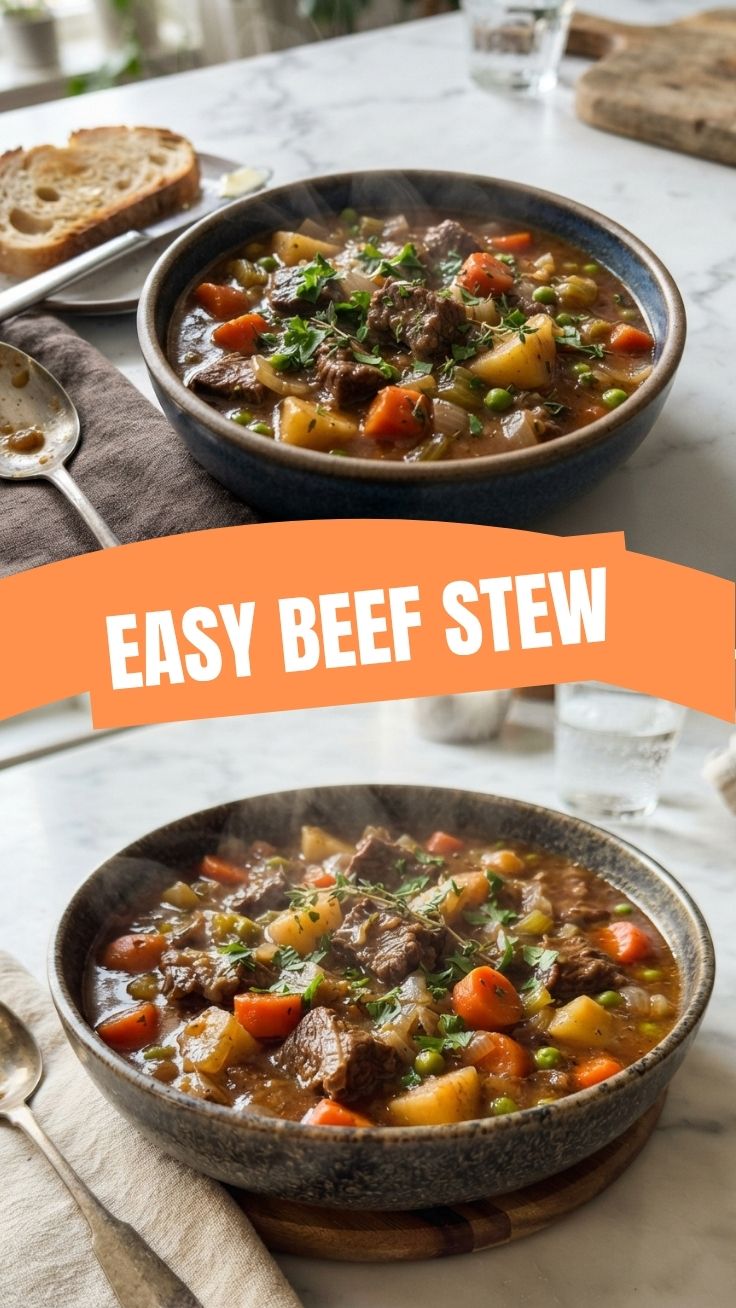
- Prep Time: 30 minutes
- Cook Time: 2.5 – 3 hours (on stovetop or in oven), 6-8 hours (in slow cooker)
- Resting Time: 15 minutes (recommended before serving to allow flavors to meld)
This recipe is perfect for a weekend project or a make-ahead meal. If you’re planning for a weeknight, consider prepping vegetables the night before. For an even more hands-off approach, you can adapt this recipe into a slow cooker beef stew, which allows the flavors to deepen beautifully over several hours while you’re away.
Step-by-Step Instructions
1. Prepare the Beef: Pat the beef cubes dry with paper towels. Season generously with salt and pepper. In your large Dutch oven or heavy-bottomed pot, heat the olive oil over medium-high heat. Sear the beef in batches until browned on all sides, about 3-4 minutes per batch. Browning creates a rich, complex flavor base. Remove the seared beef and set aside.
2. Sauté Aromatics: Reduce heat to medium. Add the chopped onion, carrots, and celery to the pot. Sauté until softened, about 5-7 minutes. Add the minced garlic and cook for another minute until fragrant.
3. Build the Flavor: Stir in the tomato paste and cook for 1-2 minutes, allowing it to slightly darken. If using, pour in the red wine and deglaze the pot, scraping up any browned bits from the bottom. Let it simmer for a few minutes until reduced by half.
4. Combine Ingredients: Return the seared beef to the pot. Stir in the beef broth, diced tomatoes (undrained), Worcestershire sauce, bay leaves, dried thyme, and rosemary. Bring to a simmer.
5. Slow Cook: Cover the pot and reduce the heat to low. Simmer gently on the stovetop for at least 1.5 – 2 hours, or transfer to a preheated oven at 325°F (160°C) for the same duration. The beef should be becoming tender. This slow cooking process is crucial for a melt-in-your-mouth Beef Stew.
6. Add Potatoes & Thicken: After the initial cooking time, add the cubed potatoes to the pot. In a small bowl, whisk together the flour with 1/4 cup of the hot stew liquid until smooth. Stir this slurry into the stew. Increase heat slightly and continue to simmer, uncovered, for another 30-45 minutes, or until the potatoes are tender and the stew has thickened to your desired consistency. For a truly effortless meal, consider a slow cooker beef stew variation where you’d simply add all ingredients except the thickener to the slow cooker and cook on low for 6-8 hours, adding the flour slurry in the last 30 minutes.
7. Season and Serve: Remove the bay leaves. Taste and adjust seasoning with additional salt and pepper as needed. Ladle into bowls and garnish with fresh parsley.
Nutritional Benefits & Advantages
This hearty Beef Stew is packed with nutritional goodness. Beef chuck is an excellent source of protein, essential for muscle repair and growth, as well as iron and zinc, which are vital for energy production and immune function. The abundance of vegetables like carrots, celery, and potatoes provides a rich array of vitamins (A, C, K), minerals, and dietary fiber, promoting digestive health and satiety. The slow cooking process helps break down tough cuts of meat, making nutrients more bioavailable and the dish easier to digest. It’s a well-rounded meal that provides sustained energy and contributes to overall well-being.
Tips, Variations & Cooking Advice
- Flavor Boost: For an extra layer of flavor, add a splash of balsamic vinegar or a teaspoon of smoked paprika during the last 30 minutes of cooking.
- Herb Power: Experiment with fresh herbs like rosemary and thyme added in the last 15 minutes of cooking for a brighter flavor.
- Vegetable Swap: Feel free to add other root vegetables like parsnips or rutabaga, or even some frozen peas in the last 10 minutes for added sweetness and color.
- Thickening Alternatives: If you prefer a thinner stew, omit the flour. For a gluten-free option, use a cornstarch slurry (1 tbsp cornstarch dissolved in 2 tbsp cold water) added at the end.
- Spicy Kick: A pinch of red pepper flakes can add a subtle heat.
- Make Ahead: Beef Stew tastes even better the next day as the flavors have more time to meld.
Common Mistakes to Avoid
- Overcrowding the Pan: When searing beef, cook in batches to ensure browning, not steaming. Overcrowding leads to pale, rubbery meat.
- Not Browning the Beef Enough: This step is crucial for developing deep, rich flavors. Don’t rush it!
- Adding Potatoes Too Early: Potatoes can become mushy if added at the very beginning of a long simmer. Add them when the beef is already becoming tender.
- Under-seasoning: Taste and adjust seasoning throughout the cooking process. A little salt and pepper go a long way in bringing out flavors.
- Forgetting Bay Leaves: Remember to remove the bay leaves before serving; they are not meant to be eaten.
Storage & Meal Prep Tips
Leftover Beef Stew stores beautifully.
- Refrigeration: Transfer cooled stew to airtight containers and refrigerate for up to 3-4 days.
- Freezing: For longer storage, freeze in individual portions or larger containers for up to 3 months. Thaw overnight in the refrigerator before reheating.
- Reheating: Gently reheat on the stovetop over medium-low heat, stirring occasionally, until heated through. You may need to add a splash of broth or water to adjust consistency. Avoid high heat, which can toughen the beef.
Conclusion
Crafting a homemade Beef Stew is a rewarding culinary journey that delivers unparalleled comfort and flavor. From the careful searing of the beef to the patient simmering with aromatic vegetables and herbs, each step contributes to a rich, heartwarming dish that’s perfect for any occasion. Whether you opt for the classic stovetop method or choose the convenience of a slow cooker beef stew, the result is a truly satisfying meal that nourishes both body and soul. We encourage you to try this recipe and experience the joy of creating such a delicious and wholesome dish from scratch. Share your culinary creations and favorite variations with us – we’d love to hear how your stew turned out!
FAQs
Q1: Can I make this stew in a slow cooker?
A1: Absolutely! After searing the beef and sautéing the aromatics (steps 1-3), combine all ingredients (except the flour slurry) in your slow cooker. Cook on low for 6-8 hours or on high for 3-4 hours, or until the beef is tender. In the last 30 minutes, stir in the flour slurry to thicken.
Q2: What’s the best way to thicken the stew without flour?
A2: For a gluten-free option, make a cornstarch slurry. Whisk 1 tablespoon of cornstarch with 2 tablespoons of cold water until smooth. Stir this into the simmering stew during the last 15-20 minutes of cooking until it thickens.
Q3: My beef isn’t tender, what went wrong?
A3: The most common reason for tough beef is not cooking it long enough. Beef chuck needs a minimum of 2.5 hours of gentle simmering (or longer in a slow cooker) to break down its connective tissues and become fork-tender. Don’t rush the cooking process!
Q4: Can I add other vegetables?
A4: Yes, feel free to customize! Green beans, peas, corn, parsnips, or mushrooms are all excellent additions. Add quicker-cooking vegetables like peas or corn in the last 10-15 minutes of cooking.
Q5: How can I enhance the flavor of the broth?
A5: Good quality beef broth is key. Using a splash of dry red wine, a tablespoon of Worcestershire sauce, and ensuring you properly sear the beef will significantly deepen the flavor. A bay leaf and fresh herbs also make a big difference.