Mastering the Wok: Your Guide to Perfect Homemade Shrimp Fried Rice
Ever wondered if you could recreate that irresistible, savory Shrimp Fried Rice from your favorite takeout spot right in your own kitchen? The answer is a resounding yes! Not only is preparing this beloved dish at home incredibly rewarding, but it also gives you complete control over the ingredients, ensuring a healthier and more personalized meal. Forget bland, greasy versions; we’re diving into a recipe that promises vibrant flavors, perfect textures, and a truly satisfying experience. Plus, this approach can easily be adapted if you’re craving a delicious seafood fried rice with other ocean delights.
Ingredients & Kitchen Tools
To embark on your culinary journey to a sensational fried rice, gather these essentials:
- Cooked, Chilled Rice (2-3 cups): Day-old, short-grain rice works best for a non-sticky, fluffy result.
- Shrimp (1 lb): Peeled, deveined, and tails on or off – your preference!
- Eggs (2 large): For that classic scrambled egg texture and added richness.
- Frozen Peas and Carrots (1 cup): A mix for convenience and a pop of color.
- Garlic (3 cloves): Minced for aromatic depth.
- Ginger (1-inch piece): Grated for a zesty kick.
- Soy Sauce (3 tbsp): Low-sodium preferred, for umami and seasoning.
- Oyster Sauce (1 tbsp): Adds a touch of sweetness and savory complexity (optional, but highly recommended).
- Sesame Oil (1 tsp): For that unmistakable nutty aroma at the end.
- Vegetable Oil (2 tbsp): For stir-frying.
- Green Onions (2-3 stalks): Sliced, for garnish and a fresh, oniony bite.
- Salt and White Pepper (to taste): Essential for seasoning.
Kitchen Tools:
- Large Wok or Skillet: Crucial for even heat distribution and authentic stir-frying.
- Spatula: Preferably a flat, wide metal or silicone spatula for efficient tossing.
- Small Bowl: For whisking eggs.
- Measuring Spoons/Cups: For accurate ingredient portions.
- Cutting Board & Knife: For prepping vegetables and aromatics.
Prep Time & Cooking Schedule
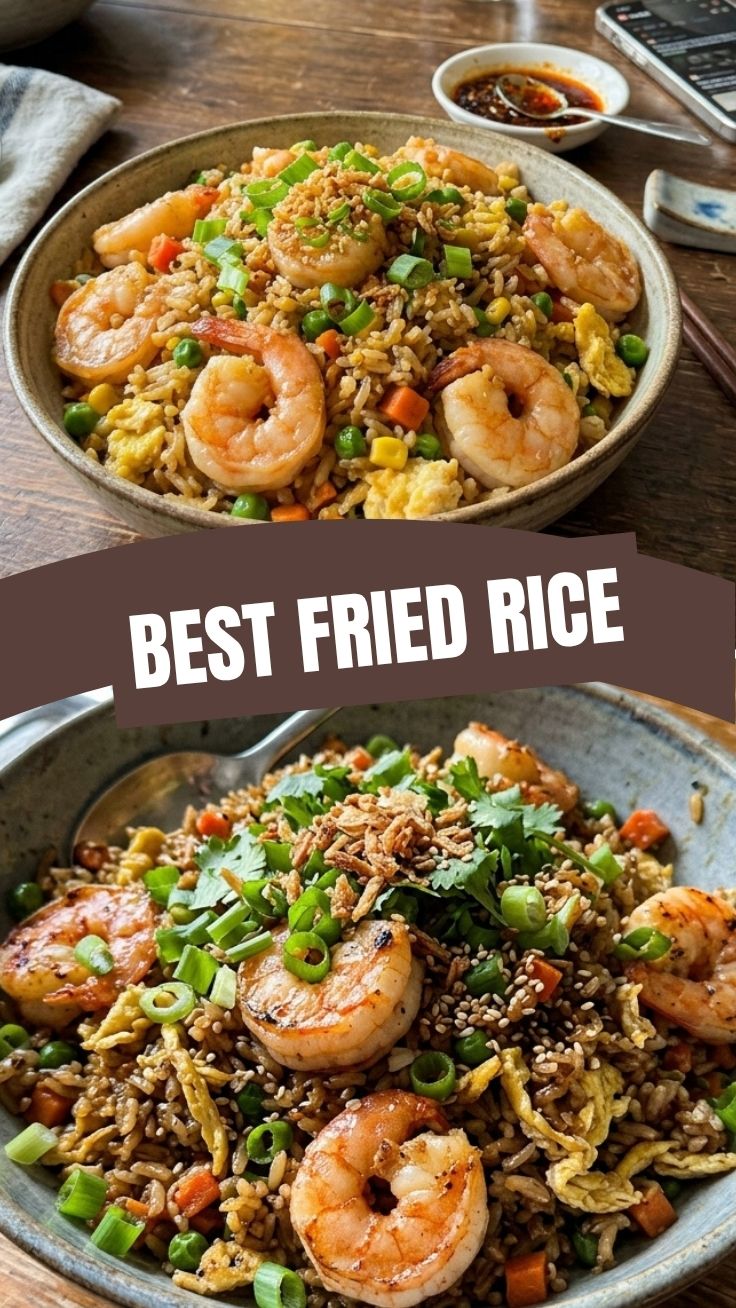
- Prep Time: 15 minutes (mainly for chopping and peeling).
- Cook Time: 10-12 minutes (fried rice is a quick-cooking marvel!).
- Resting Time: None! Serve immediately for best texture.
Having all your ingredients prepped and ready (mise en place) is key to the success of stir-frying. This fast-paced cooking method demands your full attention, so make sure everything is within arm’s reach before you even turn on the heat.
Step-by-Step Instructions
1. Prepare the Shrimp: Pat the shrimp dry with paper towels to prevent steaming. Season lightly with salt and pepper.
2. Scramble the Eggs: Heat ½ tbsp vegetable oil in your wok over medium-high heat. Pour in the whisked eggs and scramble until just set. Remove from wok and set aside.
3. Sauté Aromatics: Add another 1 tbsp vegetable oil to the hot wok. Add minced garlic and grated ginger, stir-frying for about 30 seconds until fragrant. Be careful not to burn!
4. Cook the Shrimp: Add the seasoned shrimp to the wok and stir-fry for 2-3 minutes, until pink and just cooked through. Remove from wok and set aside with the eggs.
5. Add Vegetables: Add the remaining ½ tbsp vegetable oil to the wok. Introduce the frozen peas and carrots, stir-frying for 2-3 minutes until tender-crisp.
6. Incorporate Rice: Add the cooked, chilled rice to the wok. Break up any clumps with your spatula. Stir-fry for 3-4 minutes, pressing the rice against the hot surface to achieve some browning and crispy edges.
7. Combine & Season: Return the cooked shrimp and scrambled eggs to the wok. Pour in the soy sauce and oyster sauce (if using). Stir well to combine all ingredients and ensure the rice is evenly coated with the sauces. Continue to stir-fry for another 1-2 minutes. This is where your homemade Shrimp Fried Rice truly comes alive, developing its rich, savory depth. If you’re opting for a broader seafood fried rice, this is also the stage where you’d be incorporating other pre-cooked elements like scallops or calamari.
8. Finish: Remove from heat. Drizzle with sesame oil and toss in most of the sliced green onions. Stir gently.
9. Serve: Garnish with remaining green onions and serve immediately.
Nutritional Benefits & Advantages
This homemade fried rice is not just delicious – it’s also a smart choice! Shrimp is an excellent source of lean protein, low in calories, and rich in essential nutrients like selenium, vitamin B12, and phosphorus. The addition of eggs contributes more protein and choline, vital for brain health. Vegetables like peas and carrots pack in fiber, vitamins (A, K, C), and antioxidants. By making it yourself, you control the amount of sodium and unhealthy fats, often found in excessive quantities in takeout versions, making your Shrimp Fried Rice a much healthier, fresher option.
Tips, Variations & Cooking Advice
- Rice is Key: Seriously, use cold, day-old rice! Freshly cooked rice is too moist and will lead to a mushy result.
- High Heat is Your Friend: Fried rice needs high heat to get that signature slightly smoky, wok-hei flavor. Don’t overcrowd the wok.
- Spice it Up: Add a pinch of red pepper flakes or a dash of sriracha for a spicy kick.
- Vegetable Medley: Feel free to add other quick-cooking vegetables like diced bell peppers, corn, or bean sprouts during the vegetable step.
- Protein Power-Ups: For a different take on seafood fried rice, consider adding calamari, scallops, or even pre-cooked crab meat in addition to or instead of shrimp. For non-seafood options, cooked chicken, tofu, or pork are great substitutes.
- Gluten-Free: Use tamari instead of regular soy sauce to make this dish gluten-free.
Common Mistakes to Avoid
- Overcrowding the Wok: This lowers the temperature, steaming your ingredients instead of frying them. Work in batches if necessary.
- Using Hot, Fresh Rice: As mentioned, this is a recipe for mush. Chill your rice!
- Undercooking or Overcooking Shrimp: Shrimp cooks quickly. Remove it as soon as it turns pink to prevent it from becoming rubbery.
- Lack of Seasoning: Don’t be afraid to taste and adjust. A good fried rice is well-balanced in flavor.
Storage & Meal Prep Tips
Leftover Shrimp Fried Rice can be stored in an airtight container in the refrigerator for 2-3 days. While not ideal for freezing due to the texture of shrimp and rice, it can be safely frozen for up to 1 month.
To Reheat: For best results, reheat in a hot skillet with a tiny bit of oil, breaking up the clumps, until heated through. Microwaving is an option, but it might make the rice a bit softer.
Conclusion
Crafting your own perfect Shrimp Fried Rice at home is a culinary endeavor that consistently yields delicious and satisfying results. With quality ingredients, a hot wok, and these simple steps, you can achieve that mouthwatering dish you crave, outperforming any takeout. Whether you stick to the classic shrimp or venture into a delightful seafood fried rice, the principles remain the same: fresh flavors, perfect textures, and a truly rewarding cooking experience. Give this recipe a try, share your triumphs, and savor every flavorful bite!
FAQs
Q1: Can I use brown rice for this recipe?
A1: Yes, you can use brown rice, but ensure it’s day-old and chilled. It will have a slightly chewier texture and a nuttier flavor.
Q2: What if I don’t have a wok?
A2: A large, heavy-bottomed skillet or cast-iron pan will work well. Just make sure it can handle high heat and allows enough space for tossing ingredients.
Q3: How can I prevent the rice from sticking to the pan?
A3: Ensure your pan is very hot, use a good amount of oil, and constantly stir and toss the rice. Cold, day-old rice also helps significantly.
Q4: Can I add other seasonings?
A4: Absolutely! Some people enjoy a dash of white pepper, a tiny bit of sugar for balance, or a splash of rice vinegar for tanginess. Feel free to experiment.
Q5: Is oyster sauce essential?
A5: While not strictly essential, oyster sauce adds a unique savory-sweet depth that enhances the overall flavor profile of fried rice. If you don’t have it, a small amount of sugar with extra soy sauce can be a very rough substitute, but the flavor won’t be identical.