Unlock Authentic Korean Flavors at Home: Your Ultimate Guide to Delectable Beef Bulgogi
Ever craved that irresistible symphony of sweet, savory, and umami that dances on your palate, but worried about recreating it perfectly in your own kitchen? You’re not alone! Many home cooks shy away from what seems like complex international cuisine. But what if we told you that mastering Beef Bulgogi, a cornerstone of Korean culinary tradition, is not only achievable but incredibly rewarding? This blog post will be your ultimate guide to preparing this iconic dish, transforming your kitchen into a Korean BBQ paradise. We’ll demystify the process, from selecting the finest cuts to achieving that perfectly caramelized sear. Get ready to impress your family and friends with an authentic Beef Bulgogi experience that rivals your favorite restaurant!
Ingredients & Kitchen Tools
To embark on your delicious journey, gather these essentials:
- For the Beef:
* 1 ½ lbs thinly sliced beef (ribeye, sirloin, or tenderloin): The star of our show. Thin slices are crucial for quick cooking and maximum flavor absorption.
* ½ cup soy sauce (low sodium preferred): Provides the foundational savory and umami notes.
* ¼ cup mirin (sweet rice wine): Adds a touch of sweetness and depth to the marinade.
* 2 tablespoons brown sugar (packed): Balances the savory notes and promotes caramelization.
* 2 tablespoons sesame oil: Infuses a rich, nutty aroma.
* 1 tablespoon minced garlic: Essential for that signature pungent Korean flavor.
* 1 tablespoon grated fresh ginger: Adds a zesty, aromatic kick.
* ½ Asian pear (grated): A secret ingredient that tenderizes the meat naturally. If unavailable, use a small amount of kiwi or pineapple juice (use sparingly!).
* ½ yellow onion (thinly sliced): Adds sweetness and aroma during cooking.
* 2-3 green onions (scallions), chopped: For garnish and a fresh, mild oniony bite.
* 1 tablespoon toasted sesame seeds: For garnish, adding texture and aroma.
- For Serving (Optional but Recommended):
* Cooked short-grain rice
* Lettuce leaves (for wraps)
* Kimchi
* Gochujang (Korean chili paste)
- Kitchen Tools:
* Large mixing bowl: For marinating the beef.
* Sharp knife and cutting board: For prepping ingredients.
* Grater: For Asian pear and ginger.
* Whisk: To combine marinade ingredients.
* Large skillet or cast-iron pan: For cooking the beef. A griddle or grill pan can also be used for a more authentic Korean BBQ experience.
* Tongs or spatula: For flipping and stirring.
Prep Time & Cooking Schedule
- Prep Time: 20 minutes (includes slicing, grating, and mixing the marinade)
- Marinating Time: Minimum 2 hours, ideally 4-6 hours, or even overnight for maximum flavor penetration and tenderness. This crucial step allows the beef to soak up all the deliciousness.
- Cook Time: 10-15 minutes (per batch, if cooking in stages)
- Total Time (active): Approximately 30-35 minutes
Plan to start your marinating process well in advance of your mealtime. This dish is perfect for weeknight dinners if you prep the marinade in the morning, or for a relaxed weekend feast where the flavors have ample time to meld.
Step-by-Step Instructions
Embark on the journey to creating your perfect Beef Bulgogi with these simple steps.
1. Prepare the Beef: If your beef isn’t already thinly sliced, semi-freeze it for 30 minutes to make slicing easier. Slice against the grain into thin, bite-sized pieces (about 1/8 to 1/4 inch thick).
2. Make the Marinade: In the large mixing bowl, whisk together the soy sauce, mirin, brown sugar, sesame oil, minced garlic, grated ginger, and grated Asian pear.
3. Marinate the Beef: Add the sliced beef and thinly sliced yellow onion to the marinade. Toss gently to ensure all pieces are thoroughly coated. Cover the bowl and refrigerate for at least 2 hours, or up to 24 hours. The longer, the better for developing deep flavors and tenderizing the meat.
4. Cook the Beef: When ready to cook, heat a large skillet or cast-iron pan over medium-high heat. Add a tiny drizzle of cooking oil (if necessary, though the sesame oil in the marinade usually suffices).
5. Sear in Batches: Cook the marinated beef in batches to avoid overcrowding the pan. Overcrowding will steam the meat instead of searing it, preventing that delicious caramelized crust. Cook for 2-3 minutes per side, stirring occasionally, until beautifully browned and cooked through. Avoid overcooking, as this can make the beef tough.
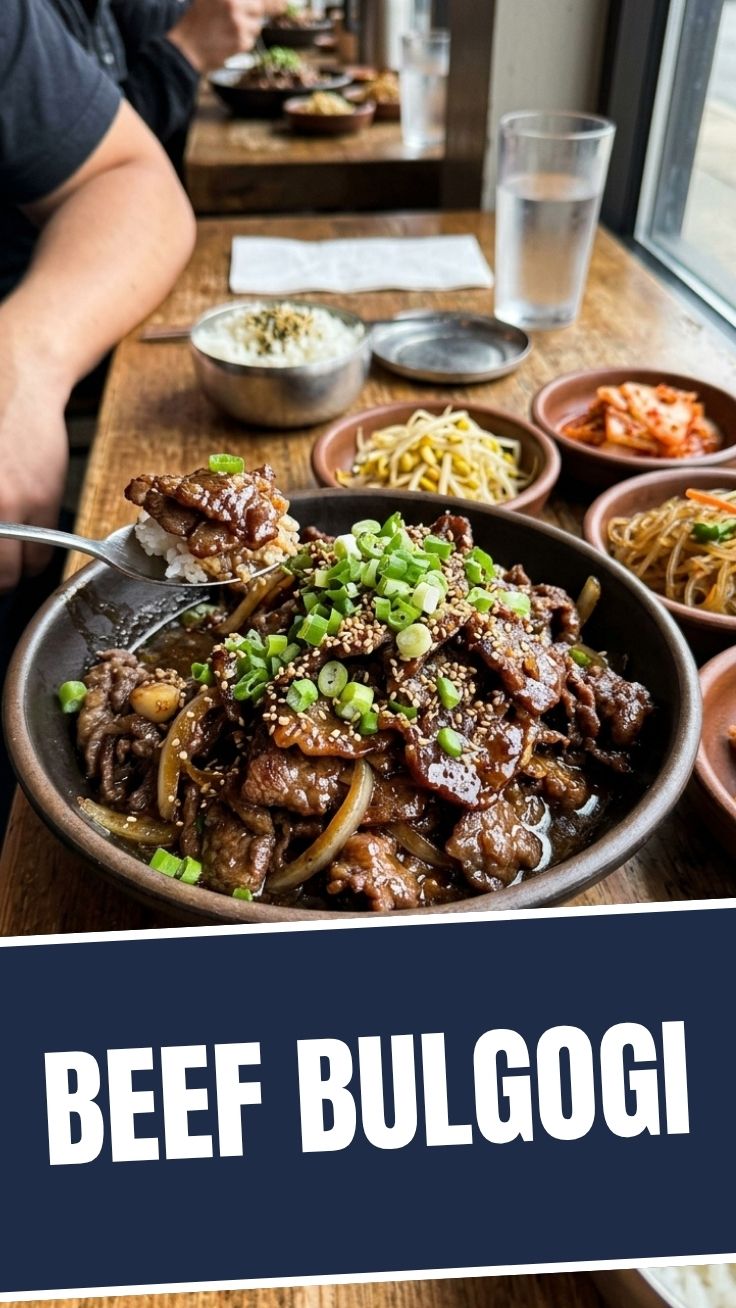
6. Garnish and Serve: Transfer the cooked Beef Bulgogi to a serving platter. Garnish with chopped green onions and toasted sesame seeds. Serve immediately with warm rice, lettuce wraps, kimchi, and a drizzle of gochujang for a true Korean BBQ experience.
Nutritional Benefits & Advantages
Beef Bulgogi offers more than just incredible flavor; it’s also a source of valuable nutrients. Lean cuts of beef provide high-quality protein, essential for muscle repair and growth, as well as iron and B vitamins, vital for energy production. The fresh ginger and garlic are natural anti-inflammatories and immune boosters. When served with a variety of fresh vegetables in lettuce wraps, it becomes a well-rounded meal rich in fiber, vitamins, and minerals, promoting overall well-being.
Tips, Variations & Cooking Advice
- Spice It Up: For a spicier kick, add a teaspoon of gochugaru (Korean chili flakes) to the marinade.
- Vegetable Additions: Feel free to incorporate other thinly sliced vegetables during the last few minutes of cooking, such as carrots, mushrooms, or bell peppers, for added color and nutrients.
- Sweetness Adjustment: Adjust the amount of brown sugar to your preference. Some enjoy a sweeter bulgogi, while others prefer it more savory.
- Grilling: If you have access to a grill, lightly oil the grates and grill the marinated beef for a smoky, authentic taste reminiscent of traditional Korean BBQ. Threading the beef onto skewers can make grilling easier.
- Dietary Adaptations:
* Gluten-Free: Use tamari instead of regular soy sauce.
* Low-Carb: Serve with cauliflower rice or extra lettuce wraps instead of white rice.
Common Mistakes to Avoid
1. Not Slicing Thin Enough: Thick slices will cook unevenly and can be tough. Aim for very thin slices.
2. Skipping the Marinade Time: The marinade is key to flavor and tenderness. Don’t rush this step.
3. Overcrowding the Pan: This is the most common mistake! Cook in batches to ensure a good sear and prevent the meat from becoming watery and steamed.
4. Overcooking the Beef: Beef Bulgogi cooks quickly due to its thinness. Cook until just browned to maintain tenderness.
Storage & Meal Prep Tips
Leftover Beef Bulgogi can be stored in an airtight container in the refrigerator for up to 3-4 days. It’s excellent for meal prepping; simply reheat gently in a skillet or microwave until warmed through. Freezing cooked bulgogi is possible for up to 2-3 months, but the texture might change slightly upon thawing and reheating. It reheats well in a pan, maintaining much of its flavor.
Conclusion
There you have it – your comprehensive guide to creating a truly spectacular Beef Bulgogi right in your own kitchen! We’ve covered everything from selecting the perfect cut of beef to the nuances of creating that authentic marinade and achieving the ideal sear. This recipe is more than just food; it’s an experience, a journey into the heart of Korean culinary artistry. Don’t let this opportunity pass you by – whip up this amazing dish and bring the vibrant flavors of Korean BBQ to your table tonight. We’re confident that once you taste your homemade masterpiece, you’ll wonder why you ever bought takeout! Share your results with us and let us know your favorite part of this delicious adventure.
FAQs
Q1: Can I use a different cut of beef for Bulgogi?
A1: While ribeye is traditional, sirloin, tenderloin, or even flank steak can be used. Just ensure they are sliced very thinly against the grain for tenderness.
Q2: What if I don’t have Asian pear?
A2: Asian pear is crucial for tenderizing. If unavailable, use a small amount (1-2 teaspoons) of finely grated kiwi or pineapple. Be careful not to use too much, as these fruits are potent tenderizers and can make the meat mushy if over-marinated.
Q3: How can I make my Bulgogi spicier?
A3: Add 1-2 teaspoons of gochugaru (Korean chili flakes) to the marinade or serve with extra gochujang on the side for a customizable kick.
Q4: Can I marinate the beef for longer than 24 hours?
A4: It’s generally not recommended to marinate for more than 24 hours, especially if using a strong tenderizer like Asian pear, kiwi, or pineapple, as the meat can become too soft or mushy.
Q5: What are good side dishes to serve with Bulgogi?
A5: Classic accompaniments include freshly steamed short-grain rice, crisp lettuce leaves for wraps, kimchi, various banchan (small Korean side dishes), and a spicy dipping sauce like gochujang.