Unleash the Flavor Fiesta: Crafting the Perfect Homemade Salsa
Have you ever experienced the vibrant burst of fresh tomatoes, the piquant kick of jalapeños, and the zesty tang of lime all harmoniously dancing on your palate? If you’re a fan of authentic, flavor-packed dishes, then mastering homemade Salsa is an absolute game-changer. Far beyond the jarred varieties, preparing your own allows for unparalleled customization, fresher ingredients, and a truly authentic taste that will transport your taste buds straight to a sun-drenched fiesta. Even if your culinary moves are more like a beginner Salsa dance than a seasoned professional, this recipe will guide you to a delicious, homemade Salsa masterpiece.
Ingredients & Kitchen Tools
Gather your culinary arsenal for this flavor adventure!
- Ripe Tomatoes (4-5 medium, e.g., Roma or beefsteak): The heart of your Salsa, choose firm, red tomatoes for optimal sweetness and acidity.
- Onion (1/2 small, white or red): Adds a pungent, aromatic base. White for a sharper taste, red for a milder, sweeter note.
- Jalapeños (1-2, deseeded for milder heat): Provides the signature spicy kick. Adjust to your heat preference.
- Cilantro (1/2 cup, fresh, chopped): Essential for a bright, herbaceous freshness.
- Lime (1, juiced): Balances flavors with its zesty acidity.
- Garlic (2 cloves, minced): Deepens the savory profile.
- Salt (1/2 tsp, or to taste): Enhances all other flavors.
- Optional: Cumin (1/4 tsp): Adds a warm, earthy depth.
- Optional: Diced Avocado (1/2, for creaminess): A delightful addition for a richer texture.
- Food Processor or Blender: For a faster, smoother Salsa.
- Sharp Knife: For precise chopping.
- Cutting Board: A stable surface for all your dicing needs.
- Mixing Bowl: To combine all the vibrant ingredients.
- Spoon or Spatula: For mixing and serving.
Prep Time & Cooking Schedule
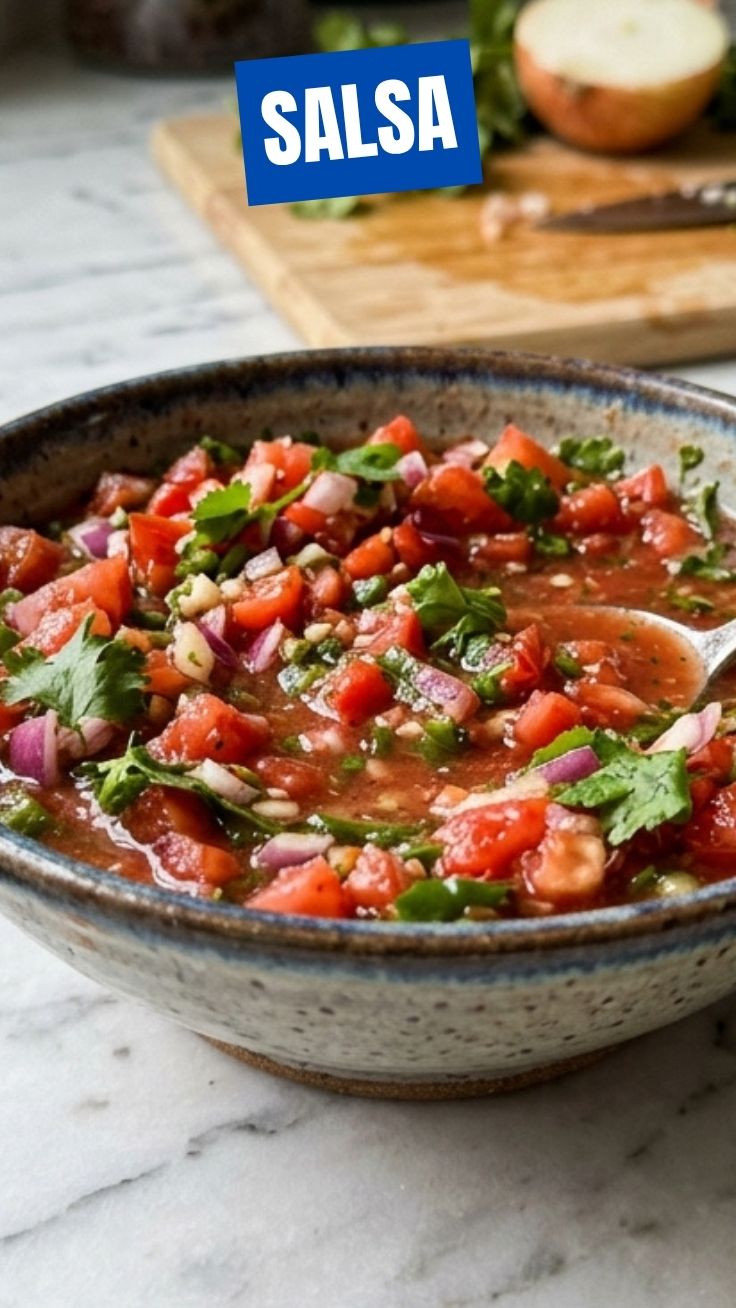
- Prep Time: 15-20 minutes (depending on your chopping speed).
- Resting Time: 30 minutes (minimum) to 1 hour (ideal). Allowing the Salsa to rest allows the flavors to meld and deepen, resulting in a more harmonious and delicious condiment. No cooking required, making this an ideal last-minute addition to any meal prep or party planning.
Step-by-Step Instructions
1. Prepare Your Produce: Wash all vegetables thoroughly. Dice the tomatoes, onion, and jalapeños into roughly 1/4-inch pieces. Mince the garlic and finely chop the cilantro. For a quicker process, you can roughly chop all ingredients and pulse them in a food processor. Be careful not to over-process, as you want some texture in your Salsa, not a puree.
2. Combine the Stars: In a spacious mixing bowl, combine the diced tomatoes, onion, jalapeños, minced garlic, and chopped cilantro.
3. Season and Zest: Squeeze the fresh lime juice over the vegetables. Add the salt and optional cumin.
4. Gentle Fusion: Stir all the ingredients together gently but thoroughly, ensuring everything is well combined. This is where the magic starts to happen, akin to the precise footwork of a Salsa dance, each element contributing to the overall rhythm and flavor.
5. The Flavor Development Stage: Cover the bowl and refrigerate for at least 30 minutes. This resting period is crucial for the flavors to marry and intensify. Taste and adjust seasoning as needed before serving.
Nutritional Benefits & Advantages
Homemade Salsa is a nutritional powerhouse! Tomatoes are rich in lycopene, a powerful antioxidant, and Vitamins C and K. Onions and garlic offer immune-boosting properties, while jalapeños contain capsaicin, which can aid metabolism. Cilantro is packed with essential vitamins and minerals. This low-calorie, low-fat condiment is a fantastic way to add vibrant flavor and a healthy dose of nutrients to virtually any meal – from tacos and grilled chicken to eggs and salads.
Tips, Variations & Cooking Advice
- Roasted Salsa: For a deeper, smoky flavor, roast the tomatoes, onion, and jalapeños on a baking sheet at 400°F (200°C) for 15-20 minutes before processing.
- Spice Level: Control the heat by leaving in or removing the seeds and membranes of the jalapeños (where most of the capsaicin resides). For extra heat, add a pinch of cayenne pepper or a serrano chili.
- Consistency: For a chunkier Salsa, chop ingredients by hand. For a smoother dip, process longer in a food processor.
- Dietary Adaptations: This recipe is naturally gluten-free and vegan. To make it low-sodium, simply reduce the amount of salt to taste.
Common Mistakes to Avoid
- Over-processing: If using a food processor, pulse in short bursts to avoid a watery, pureed consistency. You want discernible chunks.
- Skipping the Rest Time: Don’t rush it! The flavors truly develop and deepen with a little chill time. This is where the individual components harmonize into a delicious melody.
- Lack of Balance: Too much lime, too much salt, or too much onion can throw off the entire balance. Taste as you go and adjust seasonings gradually.
Storage & Meal Prep Tips
Store your homemade Salsa in an airtight container in the refrigerator for up to 5-7 days. While it won’t freeze well due to the high water content of the tomatoes, it’s perfect for making a larger batch for weekly meal prep. Enjoy it as a healthy snack with whole-grain tortilla chips, a vibrant topping for countless dishes, or a flavorful addition to breakfast burritos.
Conclusion
Crafting your own fresh, vibrant, and utterly delicious homemade Salsa is a truly rewarding culinary experience. It’s a versatile condiment that elevates any meal, bringing a touch of authentic Mexican flair right to your table. So, don’t hesitate to put on your apron, feel the rhythm of the kitchen, and let your ingredients move together like a lively Salsa dance! We encourage you to try this recipe, experiment with your own variations, and share your delightful Salsa creations with us. Your taste buds will thank you!
FAQs
Q1: Can I use canned tomatoes for this recipe?
A1: While fresh tomatoes are always recommended for the best flavor and texture, you can use high-quality canned diced tomatoes (drained) in a pinch. However, be aware that the flavor profile will be less vibrant.
Q2: How can I make my Salsa spicier?
A2: To increase the heat, leave some of the seeds and membranes in the jalapeños. For an even stronger kick, you can add a serrano pepper or a pinch of cayenne pepper.
Q3: My Salsa tastes a bit bland. What should I do?
A3: If your Salsa lacks punch, it likely needs more acidity or salt. Add a bit more lime juice and adjust the salt to taste. A dash of cumin can also deepen the flavor.
Q4: How long does homemade Salsa last?
A4: Stored in an airtight container in the refrigerator, homemade Salsa is typically fresh and delicious for 5-7 days.
Q5: Can I add other vegetables to this Salsa?
A5: Absolutely! Feel free to experiment with diced bell peppers, corn kernels, or black beans for added texture and flavor.