Savoring Summer: Your Ultimate Guide to Effortless Grilled Salmon Perfection
Ever dreamed of a vibrant, flavorful dish that epitomizes summer dining, yet is astonishingly simple to prepare? This recipe is your answer! Preparing healthy salmon summer recipes at home isn’t just about saving money; it’s about controlling quality, customizing flavors, and enjoying the immense satisfaction of a perfectly cooked meal. And when that meal involves juicy, flaky salmon, the payoff is even greater. This guide will walk you through creating a dish that’s not only delicious but also incredibly rewarding.
Ingredients & Kitchen Tools
Gathering your mise en place makes the cooking process seamless.
- Fresh Salmon Fillets (4, 6 oz each): Opt for wild-caught if possible for superior flavor and nutritional profile. Look for vibrant color and firm flesh.
- Olive Oil (3 tbsp): A good quality extra virgin olive oil for a rich, fruity base.
- Lemon (2, thinly sliced and 1 for juice): Essential for brightness and acidity, countering the richness of the salmon.
- Fresh Dill (1/4 cup, chopped): Classic pairing with salmon, offering a fresh, slightly anisy aroma.
- Garlic (3 cloves, minced): Adds depth and a pungent warmth.
- Honey or Maple Syrup (1 tbsp, optional): For a touch of sweetness and caramelization.
- Salt (to taste): Kosher or sea salt for seasoning.
- Black Pepper (to taste): Freshly ground for best flavor.
- Asparagus Spears (1 bunch, trimmed): A fantastic seasonal side, offering a gentle bitterness and crunch.
- Cherry Tomatoes (1 pint, halved): Burst with sweet and tangy juices when cooked.
Kitchen Tools:
- Large Baking Sheet: For easy cleanup and even cooking.
- Aluminum Foil or Parchment Paper: Prevents sticking and aids in moisture retention.
- Small Mixing Bowl: For preparing the marinade or seasoning blend.
- Tongs: For easy handling of salmon and vegetables.
- Sharp Knife: For slicing lemons and chopping herbs.
- Cutting Board: A stable surface for all your prep work.
- Grill or Oven: Depending on your preferred cooking method.
Prep Time & Cooking Schedule
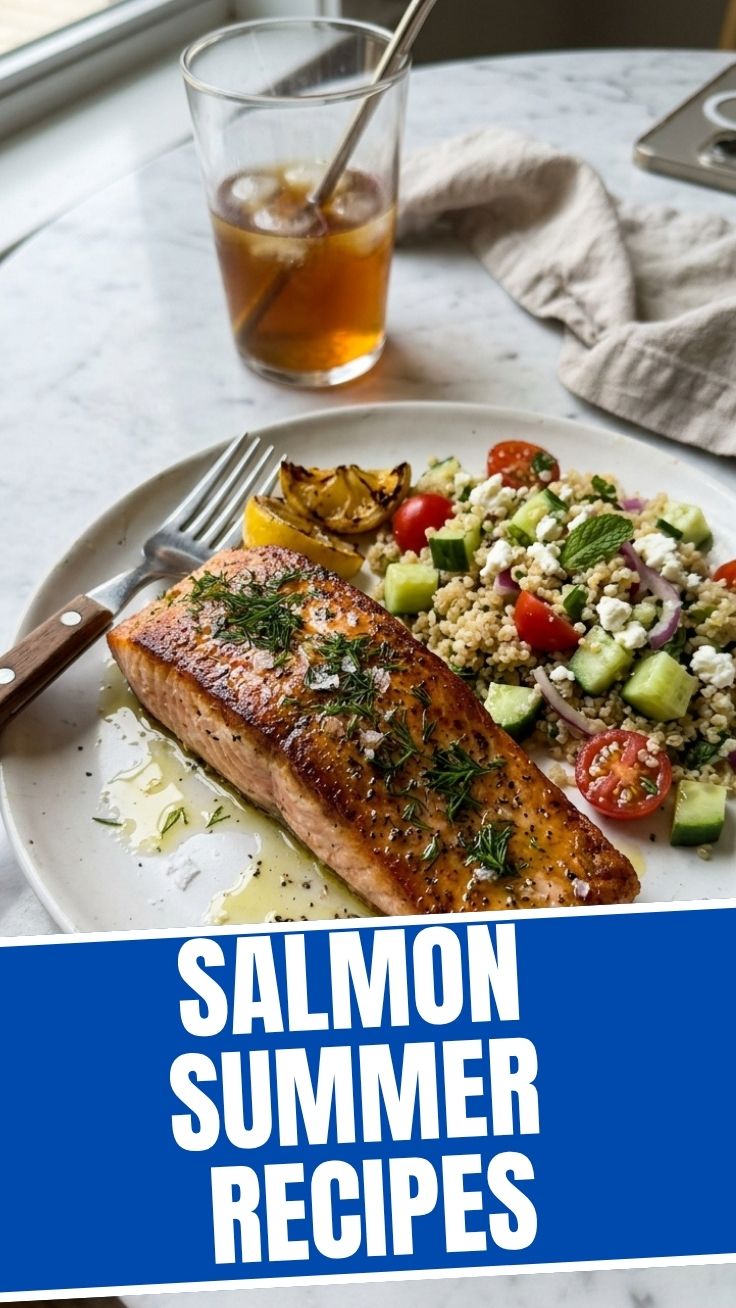
This recipe is designed for maximum flavor with minimal effort, perfect for impromptu summer gatherings.
- Prep Time: 15 minutes
- Marinating Time: 30 minutes (optional, but recommended for deeper flavor)
- Cook Time: 12-15 minutes (grill) or 15-20 minutes (oven)
- Resting Time: 5 minutes
For best results, aim to marinate the salmon for at least 30 minutes. This allows the flavors to truly penetrate, making for a more succulent and flavorful final product. If you’re short on time, even 10 minutes makes a difference!
Step-by-Step Instructions
Follow these simple steps for a dish that will impress!
1. Prepare the Marinade/Seasoning: In a small bowl, whisk together the olive oil, minced garlic, lemon juice from one lemon, chopped dill, salt, pepper, and honey (if using).
2. Season the Salmon: Pat the salmon fillets dry with paper towels. Place them on a baking sheet lined with aluminum foil or parchment paper. Pour the marinade evenly over the salmon, ensuring both sides are coated. Top each fillet with a few slices of fresh lemon. This is the first step towards creating truly healthy salmon summer recipes.
3. Prepare Vegetables: Toss the asparagus and cherry tomatoes with a drizzle of olive oil, salt, and pepper. Arrange them around the salmon on the baking sheet.
4. Grill or Bake:
* Grilling: Preheat your grill to medium-high heat (around 400°F / 200°C). Lightly oil the grates. Place the seasoned salmon (and vegetables, if grilling in a foil packet) directly on the grill. Cook for 4-6 minutes per side, or until the internal temperature reaches 145°F (63°C) and it flakes easily with a fork. For a delightful crunch, consider serving alongside a fresh summer salmon salad.
* Baking: Preheat oven to 400°F (200°C). Bake for 12-18 minutes, or until the internal temperature of the salmon reaches 145°F (63°C) and it flakes easily.
5. Rest and Serve: Once cooked, remove from the heat and let the salmon rest for 5 minutes. This allows the juices to redistribute, ensuring a tender and moist fillet. Garnish with extra fresh dill and lemon slices.
Nutritional Benefits & Advantages
Salmon is a nutritional powerhouse! It’s an excellent source of omega-3 fatty acids, which are crucial for heart health, brain function, and reducing inflammation. It’s also packed with high-quality protein, essential for muscle repair and growth, and rich in B vitamins, potassium, and antioxidants. Paired with nutrient-dense asparagus and tomatoes, this dish provides a balanced and wholesome meal.
Tips, Variations & Cooking Advice
- Flavor Boost: Add a pinch of smoked paprika or a dash of cayenne pepper to the marinade for a subtle smoky heat.
- Herb Swaps: Experiment with other fresh herbs like parsley, chives, or thyme.
- Vegetable Medley: Feel free to swap or add other quick-cooking vegetables like bell peppers, zucchini, or snap peas.
- Asian Twist: Replace dill and lemon with soy sauce, ginger, and sesame oil for an Asian-inspired flavor profile.
- Dietary Adaptations: This recipe is naturally gluten-free and dairy-free.
Common Mistakes to Avoid
- Overcooking the Salmon: The biggest mistake! Overcooked salmon becomes dry and tough. Aim for an internal temperature of 145°F (63°C) for flaky, moist results. A meat thermometer is your best friend here.
- Not Patting Dry: Excess moisture on the salmon skin prevents it from getting a good sear or crisp. Always pat the fillets dry before seasoning.
- Crowding the Pan/Grill: Ensure there’s space between the salmon fillets and vegetables for even cooking. Overcrowding can steam the food instead of searing it.
Storage & Meal Prep Tips
Leftover cooked salmon can be stored in an airtight container in the refrigerator for up to 3 days. It’s delicious cold in salads, flaked into sandwiches, or gently reheated. To reheat, microwave on a low setting in short bursts or warm gently in a pan with a splash of water or broth to prevent drying out. Freezing cooked salmon is not recommended as it changes the texture.
Conclusion
There you have it – a truly delectable and simple way to enjoy healthy salmon summer recipes that perfectly captures the essence of the season. This recipe offers a fantastic blend of flavor, nutrition, and ease, making it a staple for busy weeknights or relaxed weekend meals. Don’t hesitate to experiment with the flavors and make it your own! We encourage you to try this recipe, share your culinary masterpieces with us, and perhaps even pair it with a refreshing side like a vibrant summer salmon salad.
FAQs
Q1: Can I make this recipe in an air fryer?
A1: Absolutely! Preheat your air fryer to 375°F (190°C). Cook the salmon fillets for 10-14 minutes, flipping halfway, or until cooked through.
Q2: What’s the best way to tell if my salmon is cooked without a thermometer?
A2: Insert a fork into the thickest part of the fillet; if it flakes easily, it’s done. The flesh should be opaque but still moist.
Q3: Can I use frozen salmon for this recipe?
A3: Yes, but ensure it’s fully thawed in the refrigerator overnight before preparing. Pat it very dry to remove any excess moisture from thawing.
Q4: How can I prevent the salmon skin from sticking to the grill?
A4: Ensure your grill grates are clean and well-oiled before placing the salmon. Start with skin-side down and don’t try to move it until it naturally releases, usually after 4-5 minutes.
Q5: What side dishes pair well with this salmon?
A5: Besides the suggested asparagus and cherry tomatoes, roasted potatoes, quinoa, a light pasta salad, or a simple green salad with a vinaigrette dressing would be perfect.