Unlock the Secrets to a Savory Korean Beef Bowl at Home
Ever wondered how to bring the vibrant, umami-rich flavors of your favorite Korean takeout right into your kitchen? Preparing dishes like a Korean Beef Bowl at home isn’t just about saving money; it’s about control over ingredients, customizing flavors, and the immense satisfaction of creating a delicious meal from scratch. This comprehensive guide will walk you through crafting a truly exceptional Korean Beef Bowl, a dish that perfectly balances savory, sweet, and slightly spicy notes, rivaling even the best restaurant offerings. We’ll explore the essence of this beloved dish, often inspired by the classic flavors of bulgogi, ensuring your homemade version is a resounding success. Get ready to impress your taste buds and loved ones with a meal that’s both quick to prepare and incredibly flavorful.
Ingredients & Kitchen Tools
- 1 lb Ground Beef (80/20 lean preferred): The star of our show. The fat content ensures a juicy, flavorful outcome.
- 1/4 cup Soy Sauce (low-sodium recommended): Provides the foundational umami and saltiness.
- 2 tablespoons Brown Sugar: Adds a touch of sweetness to balance the savory notes.
- 1 tablespoon Sesame Oil: Infuses a nutty aroma and rich flavor.
- 1 tablespoon Rice Vinegar: Offers a subtle tang that brightens the dish.
- 1 teaspoon Fresh Ginger (grated): Delivers a pungent, aromatic warmth.
- 2 cloves Garlic (minced): Essential for that classic savory depth.
- 1/4 teaspoon Red Pepper Flakes (optional): For a gentle kick of spice. Adjust to your preference.
- Cooked Rice (for serving): White or brown rice works perfectly as a base.
- Green Onions (sliced, for garnish): Adds fresh, pungent crunch and visual appeal.
- Sesame Seeds (for garnish): Toasted for extra nuttiness.
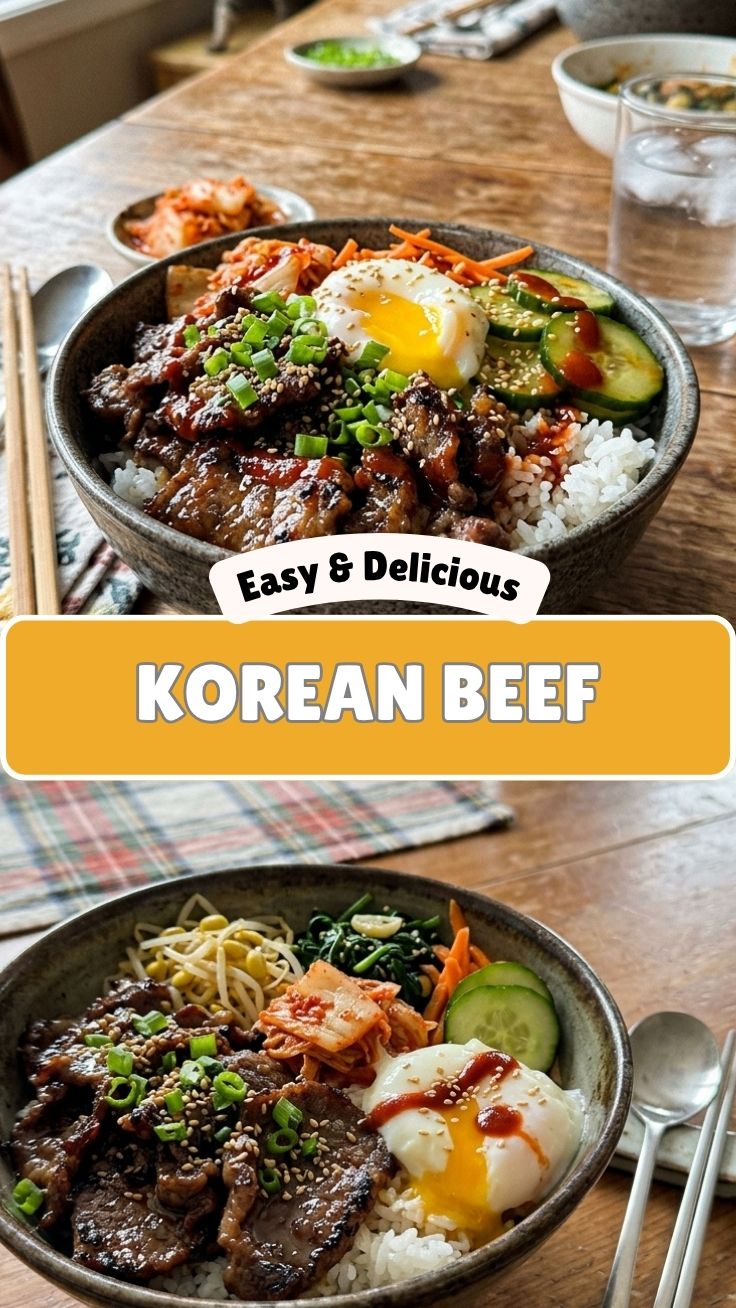
- Optional Toppings: Fried egg, kimchi, shredded carrots, cucumber slices for added texture and flavor.
Kitchen Tools: Large skillet or wok, mixing bowls, grater, measuring spoons, cutting board, sharp knife.
Prep Time & Cooking Schedule
- Prep Time: 15 minutes (Includes chopping, grating, and sauce mixing)
- Cook Time: 10-15 minutes
- Total Time: 25-30 minutes
This recipe is designed for efficiency, making it perfect for weeknight dinners. The beauty of this Korean Beef Bowl is its quick turnaround. While the beef cooks, you can prepare your garnishes and ensure your rice is hot and ready. There’s no resting or marinating time required for the beef itself, though you can mix the sauce ahead of time if you wish.
Step-by-Step Instructions
1. Prepare the Sauce: In a small bowl, whisk together the soy sauce, brown sugar, sesame oil, rice vinegar, grated ginger, minced garlic, and red pepper flakes (if using). Set aside.
2. Brown the Beef: Heat a large skillet or wok over medium-high heat. Add the ground beef and cook, breaking it up with a spoon, until it’s fully browned and no longer pink. Drain any excess fat.
3. Simmer with Sauce: Pour the prepared sauce over the cooked ground beef. Stir well to coat the beef evenly. Bring the mixture to a gentle simmer and cook for 5-7 minutes, or until the sauce has thickened slightly and the flavors have melded beautifully. This process creates a savory, rich glaze for your Korean Beef Bowl, reminiscent of a quick bulgogi.
4. Assemble the Bowls: Divide the cooked rice among serving bowls. Spoon a generous amount of the saucy ground beef over the rice.
5. Garnish and Serve: Garnish with sliced green onions and a sprinkle of sesame seeds. Add any optional toppings like a fried egg, kimchi, or shredded vegetables for extra flair. Serve immediately.
Nutritional Benefits & Advantages
This homemade Korean Beef Bowl offers a balanced meal. The lean ground beef provides a significant source of protein, essential for muscle repair and satiety. Sesame oil contributes healthy fats, while ginger and garlic offer anti-inflammatory and immune-boosting properties. By making it at home, you control the amount of sugar and sodium, allowing you to tailor it to your dietary needs. Incorporating a variety of colorful vegetable toppings further boosts the vitamin and mineral content, making it a wholesome and satisfying choice.
Tips, Variations & Cooking Advice
- Spice Level: For more heat, increase the red pepper flakes or add a dash of Gochujang (Korean chili paste) to the sauce.
- Vegetarian Option: Swap ground beef for crumbled firm tofu or plant-based ground “meat” for a delicious vegetarian version.
- Flavor Boost: Marinate the ground beef for 15-30 minutes in half of the sauce before cooking for deeper flavor, though it’s not strictly necessary.
- Add Vegetables: Stir-fry some thinly sliced carrots, bell peppers, or spinach with the beef during the last few minutes of cooking for an extra dose of veggies.
- Thicker Sauce: If you prefer a thicker sauce, mix 1 teaspoon of cornstarch with 1 tablespoon of cold water and stir it into the simmering sauce.
Common Mistakes to Avoid
- Overcooking the Beef: Ground beef cooks quickly. Overcooking can make it dry and tough. Cook just until no pink remains.
- Not Draining Fat: Excess fat can make the dish greasy. Always drain off rendered fat before adding the sauce.
- Skimping on Garnishes: Green onions and sesame seeds aren’t just for looks; they add crucial freshness and texture to the dish. Don’t skip them!
- Too Much Sodium: Start with low-sodium soy sauce and taste as you go. You can always add more salt, but you can’t take it away.
Storage & Meal Prep Tips
Leftovers of this Korean Beef Bowl store beautifully. Allow the beef mixture to cool completely before transferring it to an airtight container. It can be refrigerated for up to 3-4 days. For meal prep, store the beef mixture and cooked rice separately to prevent the rice from becoming soggy. Reheat gently in the microwave or on the stovetop with a splash of water to loosen the sauce. This dish does not freeze well due to texture changes in the beef and rice.
Conclusion
Mastering the homemade Korean Beef Bowl is a culinary triumph that offers unparalleled flavor and convenience. This recipe, with its homage to classic bulgogi flavors, proves that gourmet tastes don’t always require hours in the kitchen. We encourage you to try this recipe, experiment with your favorite toppings, and share your delicious creations. What are you waiting for? Your next favorite meal is just a few steps away!
FAQs
1. Can I use a different type of ground meat? Yes, ground chicken or turkey can be used as a leaner alternative, though the flavor profile will be slightly different.
2. How can I make this dish spicier? Increase the red pepper flakes or add a tablespoon of Gochujang (Korean chili paste) to the sauce.
3. What are good vegetarian substitutions for the beef? Crumbled firm tofu or a plant-based ground meat substitute works exceptionally well.
4. Can I prepare the sauce in advance? Absolutely! You can whisk the sauce ingredients together and store it in an airtight container in the refrigerator for up to 3 days.
5. How do I prevent my rice from getting soggy when storing leftovers? Store the beef mixture and cooked rice in separate containers. When reheating, combine them just before serving.