Unlocking Flavor: Your Ultimate Guide to a Hearty Vegetable Soup
Tired of bland, uninspired meals? Imagine a dish that’s not only bursting with vibrant flavors but also packed with wholesome goodness. That’s exactly what you get with a truly exceptional Vegetable Soup. Crafting your own at home isn’t just about saving money; it’s about controlling the quality of your ingredients, customizing to your taste, and experiencing the satisfying aroma of a delicious meal simmering on your stovetop. This comprehensive guide will walk you through creating a soul-warming, incredibly satisfying Homemade Vegetable Soup that will quickly become a family favorite.
Ingredients & Kitchen Tools
- 2 tablespoons olive oil: For sautéing aromatics and building a flavorful base.
- 1 large yellow onion, chopped: Adds sweetness and depth.
- 2 carrots, peeled and diced: Contributes natural sweetness and vibrant color.
- 2 celery stalks, diced: Provides an earthy, aromatic note.
- 3 cloves garlic, minced: Essential for a robust flavor profile.
- 8 cups vegetable broth (low sodium preferred): The liquid foundation of your soup.
- 1 (14.5 ounce) can diced tomatoes, undrained: Adds acidity and a touch of sweetness.
- 1 cup chopped potatoes (Yukon Gold or Russet work well): For heartiness and a creamy texture.
- 1 cup green beans, trimmed and cut into 1-inch pieces (fresh or frozen): Adds a fresh, crisp texture.
- 1 cup frozen corn kernels: A pop of sweetness and vibrant color.
- 1 cup frozen peas: Adds a subtle sweetness and bright green hue.
- 1 teaspoon dried thyme: A classic herb that complements vegetables beautifully.
- ½ teaspoon dried oregano: Another aromatic herb that enhances the soup’s flavor.
- Salt and freshly ground black pepper to taste: Essential for seasoning and balancing flavors.
- Fresh parsley or dill, chopped (for garnish, optional): Adds a fresh, bright finish.
Kitchen Tools:
- Large Dutch oven or stock pot: Ideal for simmering soups evenly.
- Cutting board and sharp knife: For efficient vegetable preparation.
- Measuring cups and spoons: For accurate ingredient quantities.
- Wooden spoon or spatula: For stirring and sautéing.
Prep Time & Cooking Schedule
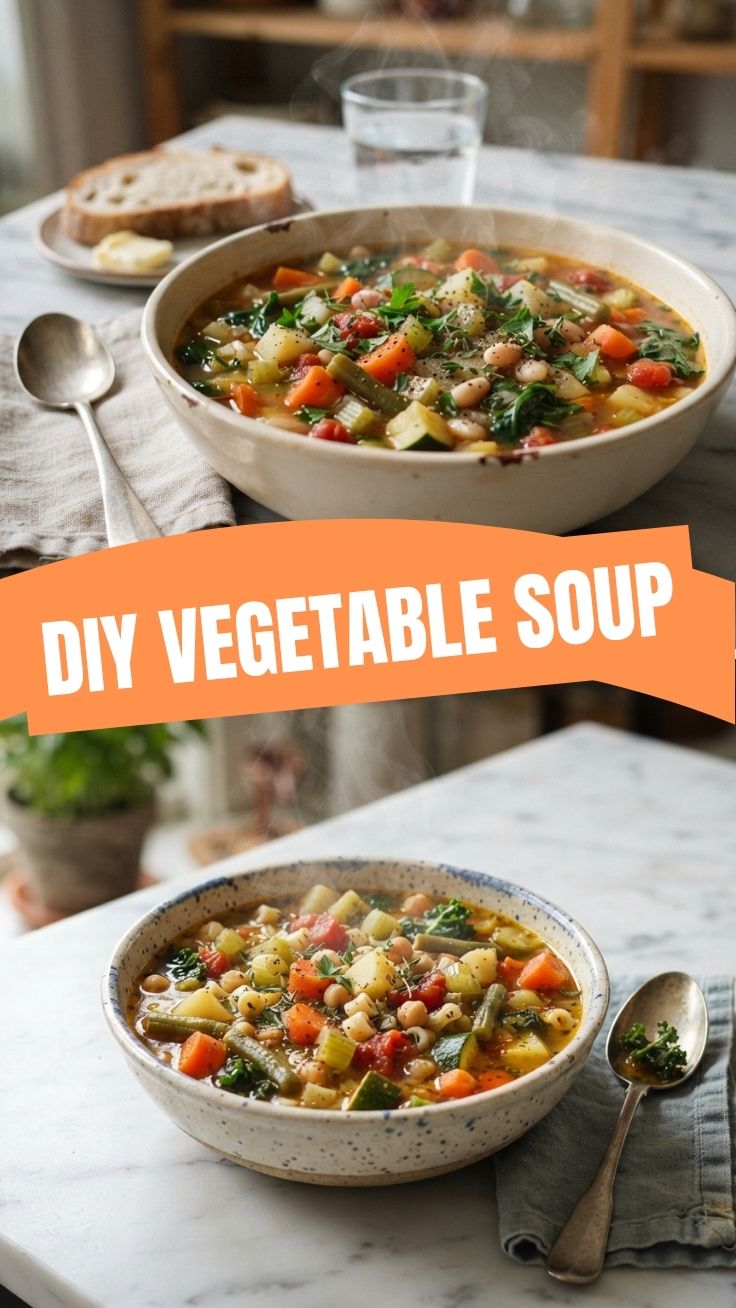
- Prep Time: 20 minutes (for chopping and measuring ingredients)
- Cook Time: 35-45 minutes (simmering until vegetables are tender)
- Resting Time: 5-10 minutes (allows flavors to meld before serving)
Plan to dedicate about an hour from start to finish for this recipe. Most of the time is hands-off simmering, making it a perfect weeknight meal or a weekend project.
Step-by-Step Instructions
1. Sauté Aromatics: Heat the olive oil in your large Dutch oven or stock pot over medium heat. Add the chopped onion, carrots, and celery. Sauté for 5-7 minutes, stirring occasionally, until the vegetables begin to soften and become fragrant. This step is crucial for building a flavorful base for your soup.
2. Add Garlic and Seasonings: Stir in the minced garlic, dried thyme, and dried oregano. Cook for another minute until the garlic is fragrant, being careful not to burn it.
3. Introduce Liquids and Hearty Vegetables: Pour in the vegetable broth and diced tomatoes (undrained). Add the chopped potatoes. Bring the mixture to a boil, then reduce the heat to a simmer, cover, and cook for 15-20 minutes, or until the potatoes are almost tender.
4. Incorporate Remaining Vegetables: Add the green beans, frozen corn, and frozen peas to the pot. Continue to simmer for another 5-10 minutes, or until all vegetables are tender-crisp. You want them cooked through but still holding their shape. A well-executed Vegetable Soup should feature vegetables with distinct textures.
5. Season and Serve: Season generously with salt and freshly ground black pepper to taste. Ladle the hot, fragrant Homemade Vegetable Soup into bowls. Garnish with fresh parsley or dill, if desired, and serve immediately.
Nutritional Benefits & Advantages
This soup is a powerhouse of nutrients! It’s naturally low in fat and calories but rich in vitamins, minerals, and fiber. The abundance of vegetables provides antioxidants, supporting overall health and boosting your immune system. Carrots offer Vitamin A, potatoes provide potassium, and green beans contribute Vitamin K. The fiber content helps with digestion and promotes a feeling of fullness, making it an excellent choice for a satisfying and healthy meal.
Tips Variations & Cooking Advice
- Spice it Up: Add a pinch of red pepper flakes for a touch of heat.
- Herb Power: Experiment with other herbs like bay leaf (remove before serving) or fresh rosemary.
- Protein Boost: For a more substantial meal, add cooked chicken, cannellini beans, or chickpeas during the last 10 minutes of cooking.
- Creamy Texture: For a richer soup, stir in a splash of heavy cream or a dollop of Greek yogurt just before serving.
- Seasonal Vegetables: Feel free to swap out vegetables based on what’s in season. Zucchini, bell peppers, or spinach are excellent additions. Add spinach in the last few minutes as it wilts quickly.
- Low-Sodium Option: Always opt for low-sodium vegetable broth and adjust salt to your preference.
Common Mistakes to Avoid
- Overcooking Vegetables: This can lead to mushy, unappetizing textures and loss of nutrients. Keep an eye on them and aim for tender-crisp.
- Under-Seasoning: Don’t be shy with salt and pepper! Taste and adjust throughout the cooking process. A well-seasoned soup is a delicious soup.
- Crowding the Pot: If you’re doubling the recipe, consider using a larger pot or cooking in batches to ensure vegetables cook evenly.
- Skipping the Sauté: Sautéing the aromatics at the beginning builds foundational flavor; don’t rush this step.
Storage & Meal Prep Tips
Leftovers of this delicious soup are fantastic! Store cooled soup in airtight containers in the refrigerator for up to 3-4 days. For longer storage, freeze portions in freezer-safe containers or bags for up to 2-3 months. Thaw overnight in the refrigerator and reheat gently on the stovetop or in the microwave, adding a splash of broth or water if needed to adjust consistency. Freezing can slightly alter the texture of potatoes, but the overall flavor remains excellent.
Conclusion
Creating a flavorful and nutritious Vegetable Soup at home is a rewarding experience that yields delicious results. With fresh ingredients and this simple guide, you can easily prepare a comforting and wholesome meal that nourishes both body and soul. Don’t hesitate to personalize this recipe to your liking; the beauty of Homemade Vegetable Soup lies in its versatility. Give it a try, share your culinary creations with us, and enjoy the pure satisfaction of a lovingly prepared dish!
FAQs
Q1: Can I use frozen vegetables instead of fresh?
A1: Absolutely! Frozen vegetables are a convenient and often equally nutritious alternative. Add them directly from the freezer; no need to thaw.
Q2: How can I make this soup creamier without dairy?
A2: For a dairy-free creamy texture, you can blend a portion of the soup (about 1-2 cups) with an immersion blender or in a regular blender, then return it to the pot. Alternatively, stir in a tablespoon of nutritional yeast for a cheesy, umami flavor.
Q3: My soup tastes bland. What can I do?
A3: Blandness usually comes down to insufficient seasoning. Taste the soup and add more salt, pepper, and herbs as needed. A squeeze of lemon juice at the end can also brighten flavors.
Q4: How can I make this soup thicker?
A4: To thicken the soup, you can mash some of the potatoes against the side of the pot with your spoon. Another option is to create a slurry with a tablespoon of cornstarch mixed with a little cold water, then stir it into the simmering soup until thickened.
Q5: Can I make this soup in a slow cooker?
A5: Yes! Sauté the aromatics (onion, carrots, celery, garlic) on the stovetop first for best flavor, then transfer them to the slow cooker with the remaining ingredients (except delicate frozen veggies like peas and corn). Cook on low for 6-8 hours or high for 3-4 hours, adding the peas and corn in the last 30 minutes.