The Ultimate Guide to Creamy, Dreamy Scalloped Potatoes: A Culinary Journey
Have you ever savored that comforting, rich aroma of perfectly baked potatoes, enveloped in a creamy sauce, golden and bubbly straight from the oven? There’s something undeniably magical about a well-executed dish of Scalloped Potatoes. Far from being just a side dish, this culinary masterpiece elevates any meal, offering a symphony of textures and flavors that are surprisingly simple to achieve at home. Forget the pre-made versions; preparing homemade Potato Gratin allows for complete control over ingredients, ensuring a dish that’s both wholesome and incredibly delicious. This comprehensive guide will walk you through every step, from selecting the finest spuds to achieving that coveted, melt-in-your-mouth consistency.
Ingredients & Kitchen Tools
Crafting the perfect batch of this classic dish requires a thoughtful selection of ingredients and the right culinary arsenal.
Potatoes (2.5-3 lbs): Russet or Yukon Gold varieties are ideal for their starch content, which helps thicken the sauce and creates a creamy texture. Avoid waxy potatoes like red bliss, as they tend to hold their shape too well and don’t absorb the sauce as effectively.*
Heavy Cream (2 cups): The cornerstone of the rich, velvety sauce. Whole milk can be used for a lighter version, but adjust seasonings as the flavor will be milder.*
Garlic (3-4 cloves): Minced for aromatic depth. Garlic powder (1 tsp) can be substituted in a pinch.*
Unsalted Butter (4 tbsp): For sautéing and enriching the sauce. Salted butter is fine, just adjust the added salt accordingly.*
All-Purpose Flour (3 tbsp): To create a roux, thickening the sauce. Cornstarch (1.5 tbsp) can be used as a gluten-free alternative, mixed with a little cold water before adding.*
Gruyère Cheese (1 cup, shredded): Adds a nutty, savory complexity. Cheddar or Parmesan are excellent substitutes for a different flavor profile.*
Nutmeg (1/4 tsp): A secret ingredient that enhances the creaminess and warmth. Don’t skip this, it truly makes a difference!*
Fresh Thyme (1 tbsp, chopped): For an earthy, herbaceous note. Dried thyme (1 tsp) can be used.*
- Salt & Black Pepper (to taste): Essential for seasoning throughout the layers.
- 9×13 inch Baking Dish: Ideal for evenly baking the potatoes.
Mandoline Slicer (optional but recommended): For uniformly thin potato slices, ensuring even cooking. A sharp knife works, but aim for consistent thickness.*
- Large Saucepan: For preparing the creamy sauce.
- Whisk: For smooth, lump-free sauce.
Prep Time & Cooking Schedule
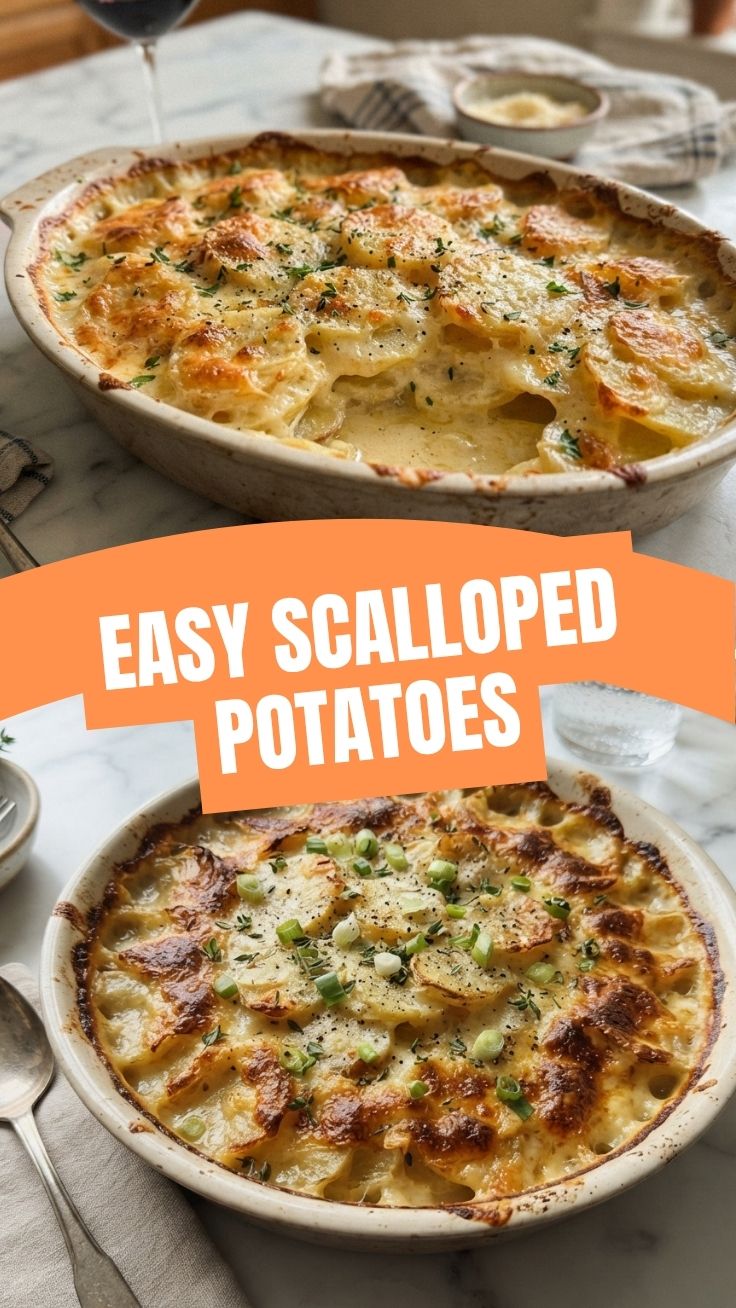
Planning is key for a stress-free cooking experience.
- Prep Time: 25-30 minutes (mostly for slicing potatoes).
- Cook Time: 60-75 minutes (covered for 45-50 min, uncovered for 15-20 min).
- Resting Time: 10-15 minutes (crucial for the sauce to set and for easier serving).
Allow yourself ample time, especially for the potato slicing. Using a mandoline can drastically reduce prep time and ensure professional-looking, even slices, which are vital for uniform cooking and a visually appealing final dish.
Step-by-Step Instructions
Follow these detailed steps to create a truly unforgettable dish of Scalloped Potatoes.
1. Preheat & Prep: Preheat your oven to 375°F (190°C). Lightly butter your 9×13 inch baking dish. Peel and slice your potatoes as thinly and uniformly as possible (about 1/8 inch thick) using a mandoline or a very sharp knife.
2. Make the Roux: In a large saucepan, melt the butter over medium heat. Add the minced garlic and cook for 1 minute until fragrant. Whisk in the flour and cook for another 1-2 minutes, stirring constantly, to create a smooth roux.
3. Create the Cream Sauce: Gradually whisk in the heavy cream, a little at a time, to avoid lumps. Bring the mixture to a gentle simmer, whisking until the sauce thickens. Remove from heat and stir in the shredded Gruyère cheese, nutmeg, fresh thyme, salt, and black pepper until the cheese is melted and the sauce is smooth.
4. Layer the Potatoes: Arrange a single layer of potato slices in the bottom of your prepared baking dish, overlapping them slightly. Pour about one-third of the cream sauce evenly over the potatoes. Repeat this process two more times, ending with a layer of sauce.
5. Bake to Perfection: Cover the baking dish tightly with aluminum foil. Bake for 45-50 minutes, or until the potatoes are tender when pierced with a fork. Remove the foil and continue baking for another 15-20 minutes, or until the top is golden brown and bubbly. This final step crisps the top beautifully, transforming it into a decadent Potato Gratin.
6. Rest & Serve: Let the dish rest for 10-15 minutes before serving. This allows the sauce to set and prevents it from being too runny.
Nutritional Benefits & Advantages
Beyond its undeniable deliciousness, this dish offers some notable benefits. Potatoes are an excellent source of vitamin C, potassium, and vitamin B6. When prepared at home, you control the amount of fat and sodium, making it a more wholesome choice than many restaurant versions. The addition of dairy provides calcium, while the herbs contribute antioxidants and a fresh burst of flavor without adding significant calories.
Tips, Variations & Cooking Advice
- Cheese Swap: Experiment with other cheeses like sharp white cheddar for a tangier profile, or a blend of Parmesan and Fontina for added complexity.
- Herb Power: Rosemary or chives can be fantastic alternatives or additions to the thyme.
- Smoky Flavor: Add a pinch of smoked paprika to the cream sauce for a subtle, smoky depth.
- Spicy Kick: A dash of cayenne pepper or a pinch of red pepper flakes can introduce a pleasant heat.
- Dairy-Free Version: Use a plant-based milk (like full-fat oat or cashew milk) and a dairy-free cheese alternative. A cornstarch slurry will be crucial for thickening.
- Meat Lover’s Twist: Incorporate cooked, crumbled bacon or diced ham between the layers for a heartier dish.
- Crispier Top: For an extra crispy top, sprinkle a mixture of panko breadcrumbs and a little melted butter over the final layer before baking uncovered.
Common Mistakes to Avoid
- Thick Slices: Inconsistent or thick potato slices lead to uneven cooking, with some parts undercooked and others mushy.
- Rinsing Potatoes: Rinsing sliced potatoes removes valuable starch, which helps thicken the sauce.
- Undercooked Sauce: Not cooking the flour long enough in the roux can result in a raw flour taste.
- Overcooking: While a little browning is good, overcooking can dry out the potatoes and make them mushy. Keep an eye on the oven during the final uncovered baking stage.
- Skipping the Rest: Patience is key! Resting allows the sauce to thicken and the flavors to meld.
Storage & Meal Prep Tips
Leftovers can be a delightful treat!
- Refrigeration: Store cooled leftovers in an airtight container in the refrigerator for up to 3-4 days.
- Freezing: While possible, freezing may alter the texture of the potatoes and sauce slightly, making them a bit grainier. If you do freeze, ensure it’s in a freezer-safe, airtight container for up to 2-3 months. Thaw in the refrigerator overnight.
- Reheating: For best results, reheat portions in the oven at 300°F (150°C) until warmed through, loosely covered with foil to prevent drying. Microwaving is also an option for individual servings, but the texture might be softer.
Conclusion
Mastering the art of Scalloped Potatoes is a rewarding culinary achievement that brings warmth and comfort to any table. By following these detailed steps, you can create a dish that is rich, creamy, and utterly irresistible, turning simple ingredients into a gourmet experience. We hope this guide empowers you to bake your most delectable Potato Gratin yet! Share your creations and favorite variations in the comments below – we’d love to hear from you!
FAQs
Q1: Can I make this dish ahead of time?
A1: Yes, you can assemble the dish completely and refrigerate it for up to 24 hours before baking. Let it come to room temperature for about 30 minutes before baking, and you might need to add 10-15 minutes to the covered baking time.
Q2: What’s the difference between scalloped potatoes and au gratin potatoes?
A2: Traditionally, scalloped potatoes are made with cream, milk, or broth, often without cheese, while au gratin potatoes always include cheese (usually baked until bubbly and browned) and sometimes breadcrumbs on top. However, the terms are often used interchangeably, and many modern recipes for scalloped potatoes do include cheese.
Q3: My sauce turned out too thin/thick. What went wrong?
A3: If too thin, try letting it simmer gently for a bit longer to reduce, or add a very small amount of cornstarch mixed with cold water. If too thick, whisk in a little more warm cream or milk until desired consistency.
Q4: Can I use pre-sliced potatoes?
A4: While convenient, pre-sliced potatoes are often thicker and can contain preservatives. For the best texture and flavor, slicing fresh potatoes is recommended.
Q5: What kind of potatoes are best for this recipe?
A5: Starchy potatoes like Russet or Yukon Gold are ideal as they break down slightly during cooking, contributing to the creamy texture of the sauce.