The Ultimate Guide to Crafting the Perfect Homemade Greek Salad
Tired of bland, uninspired salads? Do you long for a dish that’s both refreshingly light and bursting with flavor, all while aligning with a healthy lifestyle? Look no further than the timeless classic: the Greek Salad. This vibrant culinary gem is not just a side dish; it’s a celebration of fresh produce, savory cheeses, and a simple yet profound dressing that embodies the essence of the Mediterranean diet. Preparing it at home allows for unparalleled control over ingredient quality, ensuring a truly authentic and delicious experience that store-bought versions simply can’t match. Imagine crisp cucumbers, juicy tomatoes, briny olives, and creamy feta, all harmoniously combined to create a taste sensation that transports you straight to the sun-drenched shores of Greece.
Ingredients & Kitchen Tools
To embark on your journey to the perfect Greek Salad, gather these essential components:
- Fresh Vegetables:
* 2 large ripe Tomatoes: Choose firm, red tomatoes for optimal flavor and texture.
* 1 large English Cucumber: Less watery than regular cucumbers, ideal for salads.
* 1 Green Bell Pepper: Adds a sweet crunch.
* ½ Red Onion: Thinly sliced for a sharp, pungent kick; soak in cold water for 10 minutes to mellow its flavor, if desired.
- Olives & Feta:
* ½ cup Kalamata Olives: Pitted for convenience, these add a salty, briny depth.
* 4 oz Feta Cheese: A block of authentic Greek feta is preferred, crumbled or cut into cubes.
- Dressing:
* ¼ cup Extra Virgin Olive Oil: High-quality oil is crucial for the dressing.
* 2 tablespoons Red Wine Vinegar: Provides tang and acidity.
* 1 teaspoon Dried Oregano: Essential for that classic Greek flavor.
* Salt and Freshly Ground Black Pepper: To taste, enhancing all the flavors.
- Optional Substitutions:
* Cherry tomatoes for larger ones.
* Red bell pepper for green.
* A splash of fresh lemon juice in the dressing for extra brightness.
* A pinch of sumac for an earthy, tangy note.
- Kitchen Tools:
* Large Mixing Bowl: For tossing all ingredients together.
* Sharp Knife: For precise chopping and slicing.
* Cutting Board: To protect your countertops.
* Whisk or Fork: For emulsifying the dressing.
* Measuring Spoons and Cups: For accurate ingredient quantities.
Prep Time & Cooking Schedule
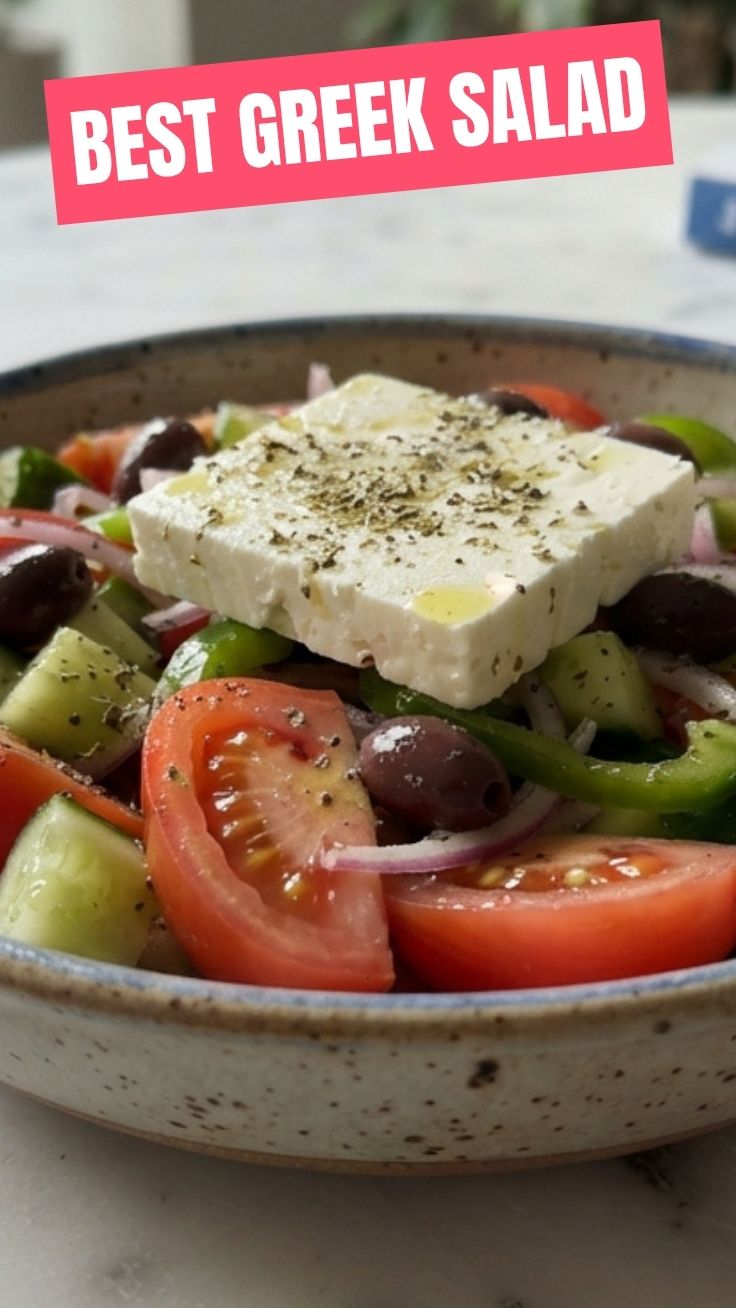
This recipe is wonderfully quick, making it perfect for a healthy weeknight meal or a vibrant addition to a weekend gathering.
- Prep Time: 15-20 minutes
- Cook Time: 0 minutes (no cooking required!)
- Resting Time: 10-15 minutes (optional, but allows flavors to meld beautifully)
Plan to assemble the salad shortly before serving to ensure the vegetables remain crisp. If preparing in advance, keep the dressing separate and add it just before serving to prevent the vegetables from becoming soggy.
Step-by-Step Instructions
Follow these simple steps to create a show-stopping Greek Salad that epitomizes the health benefits of the Mediterranean diet.
1. Prepare the Vegetables: Wash all vegetables thoroughly. Dice the tomatoes into bite-sized pieces. Halve the cucumber lengthwise, scoop out the seeds if desired (to reduce water content), and then slice into half-moons. Core and deseed the green bell pepper, then chop into ½-inch pieces. Thinly slice the red onion.
2. Combine Vegetables: In your large mixing bowl, combine the chopped tomatoes, cucumber, green bell pepper, and sliced red onion.
3. Add Olives and Feta: Scatter the pitted Kalamata olives over the vegetables. Crumble or cube the feta cheese and add it to the bowl.
4. Make the Dressing: In a small bowl, whisk together the extra virgin olive oil, red wine vinegar, dried oregano, salt, and black pepper until well combined. Taste and adjust seasoning as needed. The dressing should be tangy and herbaceous.
5. Dress and Serve: Pour the dressing over the salad ingredients. Gently toss everything together until the vegetables and feta are evenly coated. For best results, let the salad rest for 10-15 minutes to allow the flavors to marry before serving.
Nutritional Benefits & Advantages
The Greek Salad is a nutritional powerhouse, aligning perfectly with the principles of the Mediterranean diet. It’s rich in vitamins, minerals, and antioxidants from the abundance of fresh vegetables. Tomatoes provide lycopene, cucumbers offer hydration, and bell peppers are packed with Vitamin C. Kalamata olives contribute healthy monounsaturated fats and antioxidants, while feta cheese delivers calcium and protein. The extra virgin olive oil in the dressing is a cornerstone of heart health, known for its anti-inflammatory properties and beneficial fatty acids. This salad is naturally low in processed ingredients and high in fiber, promoting digestive health and satiety, making it an excellent choice for weight management and overall well-being.
Tips, Variations & Cooking Advice
- Flavor Boost: Grilling the bell peppers lightly before adding them to the salad can introduce a smoky depth.
- Ingredient Swaps: For a different twist, try adding capers for extra brininess, or a sprinkle of fresh dill or parsley.
- Protein Power-Up: Transform this salad into a full meal by adding grilled chicken, chickpeas, or canned tuna.
- Dietary Adaptations:
* Dairy-Free: Omit the feta cheese or use a plant-based feta alternative.
* Gluten-Free: This salad is naturally gluten-free!
- Presentation: Serve the salad on a large platter for a more appealing presentation, especially if entertaining.
Common Mistakes to Avoid
- Over-Dressing: Too much dressing can make the salad soggy. Start with a smaller amount and add more if needed.
- Poor Quality Ingredients: The simplicity of this salad means that the quality of each ingredient shines through. Invest in good tomatoes, fresh cucumber, and authentic feta.
- Adding Dressing Too Early: If you’re not serving immediately, keep the dressing separate and add it right before eating to maintain crispness.
- Warm Vegetables: Ensure your vegetables are cold for a refreshing experience.
Storage & Meal Prep Tips
Greek Salad is best enjoyed fresh, but you can certainly prepare components in advance for easy meal prep.
- Prepping Ahead: Chop all vegetables and store them in separate airtight containers in the refrigerator for up to 2-3 days. Prepare the dressing separately and store it in a sealed jar at room temperature.
- Storing Leftovers: If the salad has already been dressed, it will keep in an airtight container in the refrigerator for up to 1 day, though the vegetables may soften. Undressed salad components will last longer. Freezing is not recommended as it will alter the texture of the fresh vegetables.
Conclusion
Crafting your own Greek Salad is more than just cooking; it’s an embrace of fresh flavors, wholesome ingredients, and the vibrant traditions of the Mediterranean diet. This guide has equipped you with everything you need to create a salad that is both simple to prepare and exquisitely satisfying. From the crisp vegetables to the tangy feta and the aromatic olive oil dressing, every bite is a testament to the power of natural, unprocessed foods. We encourage you to try this recipe, experiment with the suggested variations, and share your delicious results. Discover how easy and rewarding it is to bring the essence of Greek cuisine into your home, enhancing your health and tantalizing your taste buds.
FAQs
Q1: Can I use different types of olives?
A1: While Kalamata olives are traditional and highly recommended for their distinct flavor, you can substitute with other briny black olives if preferred, or even a mix of green and black olives.
Q2: How can I make my Greek Salad less watery?
A2: To reduce wateriness, scoop out the seeds from your cucumber before slicing. Additionally, lightly salt the chopped cucumber and tomato, let them sit for 10-15 minutes, then pat them dry with a paper towel before adding to the salad.
Q3: What’s the best way to get good quality feta?
A3: Look for authentic Greek feta, often found in brine in specialty cheese shops or the international section of larger grocery stores. Block feta in brine generally has superior flavor and texture compared to pre-crumbled varieties.
Q4: Can I add herbs other than oregano?
A4: Absolutely! Fresh herbs like parsley or dill can be wonderful additions. Mint can also add a refreshing touch, though it’s less traditional for a classic Greek salad.
Q5: Is this salad suitable for a vegan diet?
A5: The classic Greek Salad contains feta cheese, which is dairy. To make it vegan, simply omit the feta or use a high-quality plant-based feta alternative. The rest of the ingredients are naturally vegan.