Ditch the Can: Unlocking the Magic of Homemade Tomato Soup
Ever found yourself craving a comforting bowl of Tomato Soup, only to reach for the familiar, yet often bland, carton of Canned Tomato Soup? What if I told you that creating a remarkably flavorful and wholesome tomato soup from scratch is not only achievable but also incredibly rewarding? Beyond the convenience, whipping up your own tomato soup offers unparalleled control over ingredients, allowing you to sidestep unwanted additives and tailor the taste exactly to your liking. In a world increasingly focused on processed foods, rediscovering the simple joy of a truly homemade tomato soup can transform your culinary experience and elevate a humble ingredient into a star.
Ingredients & Kitchen Tools
Here’s everything you’ll need to craft your exquisite homemade tomato soup:
Ripe Tomatoes (2.5 lbs): Choose high-quality, ripe red tomatoes for the best flavor. Roma, San Marzano, or even a mix of heirloom varieties work wonderfully. These are the soul of your soup.*
Onion (1 large): Yellow or white onion, roughly chopped. Adds a foundational sweetness and aroma.*
Garlic (4-5 cloves): Minced. Essential for aromatic depth.*
Vegetable or Chicken Broth (4 cups): Low sodium. Forms the liquid base and enhances flavor.*
Olive Oil (2 tablespoons): Extra virgin. For sautéing and enriching the soup.*
Fresh Basil (1/4 cup): Chopped, plus extra for garnish. Brightens the flavor profile.*
Heavy Cream (1/2 cup – optional): For a richer, creamier texture. Adds luxuriousness, but can be omitted for a lighter soup.*
Sugar (1 teaspoon – optional): To balance acidity if needed. A touch can mellow sharp tomato notes.*
Salt and Black Pepper: To taste. Seasoning is key for a balanced dish.*
Immersion Blender or Regular Blender: For achieving a smooth consistency. The secret to that velvety texture.*
Large Pot or Dutch Oven: For cooking the soup. A heavy-bottomed pot ensures even heating.*
- Cutting Board and Knife: For prepping ingredients.
- Measuring Cups and Spoons: For accurate ingredient ratios.
Prep Time & Cooking Schedule
- Prep Time: 20 minutes (chopping tomatoes, onions, garlic)
- Cook Time: 40-50 minutes (sautéing, simmering)
- Resting Time: 5-10 minutes (after blending, before serving)
Plan to dedicate about an hour and a half from start to finish. The bulk of the time is hands-off simmering, allowing the flavors to meld beautifully. This makes it a perfect weekend project or a satisfying, unhurried weeknight meal if you prep your ingredients beforehand.
Step-by-Step Instructions
1. Roast or Sauté Tomatoes: Begin by preparing your tomatoes. You can roast them for deeper flavor by tossing them with a drizzle of olive oil, salt, and pepper, then baking at 400°F (200°C) for 20-25 minutes until softened and slightly charred. Alternatively, simply dice them for a quicker stove-top approach. Sautéing them in the pot adds sweetness. This crucial first step differentiates homemade goodness from the often muted notes of Canned Tomato Soup.
2. Aromatic Base: In your large pot or Dutch oven, heat 1 tablespoon of olive oil over medium heat. Add the chopped onion and cook until softened and translucent, about 5-7 minutes. Stir in the minced garlic and cook for another minute until fragrant, being careful not to burn it. This aromatic foundation is essential for building a complex and satisfying Tomato Soup.
3. Simmering the Flavors: Add the prepared tomatoes (roasted or diced) to the pot with the onions and garlic. Pour in the vegetable or chicken broth. Bring the mixture to a gentle boil, then reduce heat to low, cover, and simmer for 30-35 minutes, or until the tomatoes are very tender and have broken down.
4. Blend to Perfection: Remove the pot from the heat. Carefully use an immersion blender to purée the soup directly in the pot until smooth and creamy. If you don’t have an immersion blender, transfer the soup in batches to a regular blender (be very careful with hot liquids, filling the blender only halfway and holding the lid securely with a towel).
5. Finish and Season: Return the puréed soup to the stovetop over low heat. Stir in the chopped fresh basil and the optional heavy cream if using. Taste and adjust seasoning with salt, fresh black pepper, and the optional sugar (if the tomatoes are particularly acidic). Simmer for another 5 minutes to allow the flavors to meld.
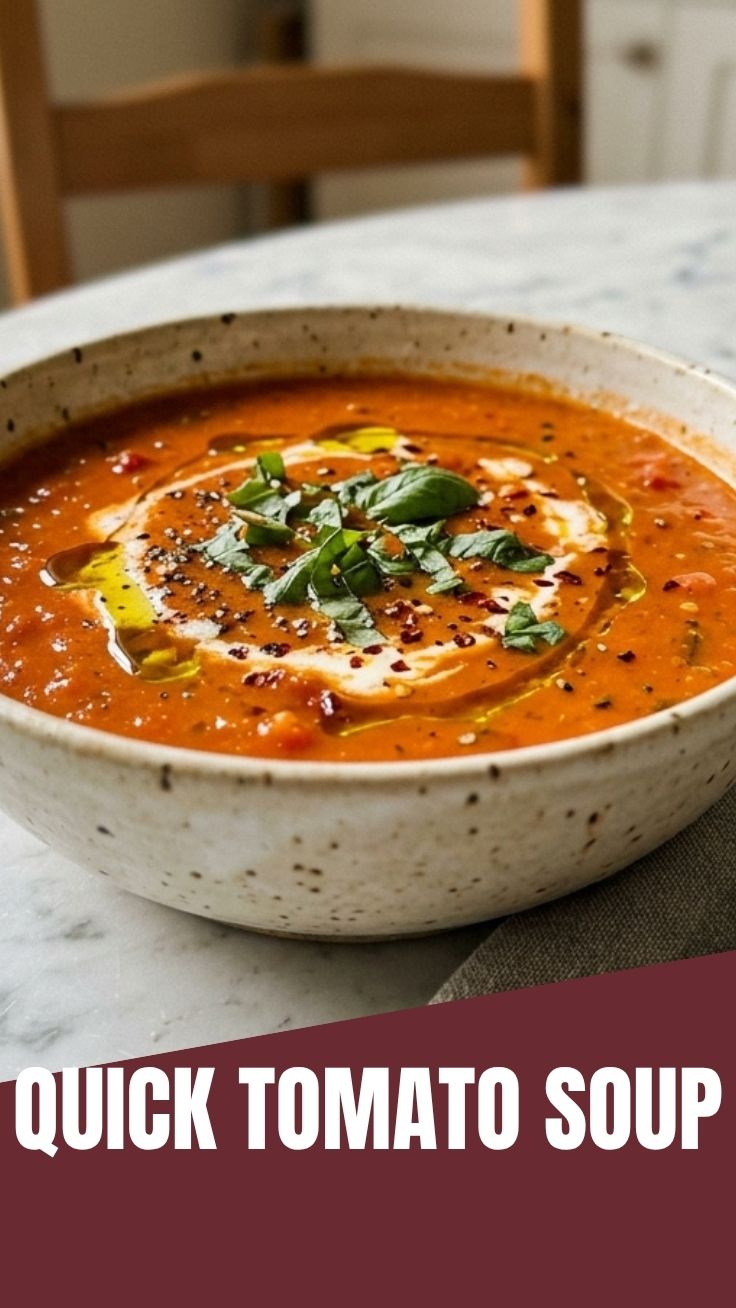
6. Serve Warm: Ladle hot soup into bowls and garnish with extra fresh basil or a swirl of cream. Enjoy immediately!
Nutritional Benefits & Advantages
Homemade tomato soup is a powerhouse of nutrients. Tomatoes are rich in lycopene, a powerful antioxidant linked to reduced risk of chronic diseases. They also provide significant amounts of Vitamin C and K, potassium, and folate. Opting for homemade allows you to control sodium levels, avoid high fructose corn syrup often found in commercial versions, and boost fiber content by retaining the whole tomato. If you include cream, you add healthy fats, but even without it, the soup remains wonderfully satisfying and nourishing.
Tips, Variations & Cooking Advice
- Smoky Twist: For a deeper flavor, add a pinch of smoked paprika or a roasted red bell pepper during the simmering stage.
- Spicy Kick: A pinch of red pepper flakes or a dash of hot sauce can elevate the warmth.
- Herb Garden: Experiment with other fresh herbs like oregano, thyme, or a bay leaf during simmering.
- Vegan/Dairy-Free: Skip the heavy cream or substitute with full-fat coconut milk (for a subtle tropical note) or a dairy-free creamer. Ensure your broth is vegetable-based.
- Batch Cooking: This recipe doubles well, making it excellent for meal prepping.
- Texture Control: For an extra-smooth soup, pass the blended soup through a fine-mesh sieve to remove any remaining skins or seeds.
Common Mistakes to Avoid
- Under-Simmering: Not allowing enough time for simmering means tomatoes won’t fully break down, resulting in a less flavorful and less smooth soup.
- Over-Salting Early: Tomatoes can release a lot of liquid, diluting initial seasoning. Always adjust salt at the very end after simmering.
- Burning Garlic: Garlic cooks quickly; add it after onions are translucent and cook only until fragrant to prevent a bitter taste.
- Rushing Blending: Ensure the soup is thoroughly blended for a silky texture. Lumps can detract from the experience.
Storage & Meal Prep Tips
Leftover tomato soup can be stored in an airtight container in the refrigerator for up to 3-4 days. For longer storage, freeze in individual portions for up to 3 months. Thaw overnight in the refrigerator or gently reheat on the stovetop over low heat, stirring occasionally, adding a splash of broth or water if it’s too thick. Reheating slowly helps maintain its creamy texture and rich flavor.
Conclusion
There’s a profound satisfaction in preparing a dish from scratch, and this homemade Tomato Soup is a prime example. Moving beyond the convenience of store-bought Canned Tomato Soup opens up a world of fresh, vibrant flavors and wholesome goodness. We’ve explored the simplicity, nutritional benefits, and customizable nature of this classic comfort food. Try this recipe, experiment with the variations, and savor the rich, comforting taste that only a truly homemade soup can deliver. Share your culinary creations in the comments below!
FAQs
Q1: Can I use canned tomatoes instead of fresh?
A1: Yes, you can. Use high-quality canned whole peeled tomatoes or crushed tomatoes. Look for San Marzano tomatoes for exceptional flavor. The cooking time for simmering might be slightly reduced.
Q2: How can I make my soup thicker without adding cream?
A2: You can purée 1-2 roasted red bell peppers with the tomatoes, or add a cooked potato during the simmering phase and blend it into the soup. This adds natural thickness and body.
Q3: My soup tastes too acidic. What can I do?
A3: A tiny pinch of sugar (1/2 to 1 teaspoon) or a pat of butter stirred in at the end can help balance the acidity of the tomatoes.
Q4: Can I make this soup ahead of time?
A4: Absolutely! Tomato soup often tastes even better the next day as the flavors have more time to meld. Reheat gently on the stovetop.