Master the Art of the Perfect [Focus Keyword: Greek Salad] at Home
Ever wondered if you could recreate that vibrant, refreshing Greek Salad you savored on your last Mediterranean getaway, right in your own kitchen? The good news is, you absolutely can! This comprehensive guide will empower you to craft an authentic Greek Salad that rivals any taverna, bringing the sun-drenched flavors of Greece directly to your table. Not only is preparing this classic at home incredibly rewarding, but it also allows for complete control over ingredients, ensuring a fresh, healthy, and utterly delicious meal. Forget limp lettuce and bland dressings – we’re talking crisp vegetables, creamy feta, briny olives, and an invigorating dressing that will transport your taste buds. This recipe isn’t just about mixing ingredients; it’s about understanding the synergy of textures and flavors that define a truly exceptional Mediterranean Salad.
Ingredients & Kitchen Tools
- Ripe Tomatoes (2-3 large): Opt for firm, red tomatoes like vine-ripened or beefsteak. Cherry tomatoes also work beautifully for a sweeter burst. (Diced)
- English Cucumber (1 large): Seedless and less watery than regular cucumbers, ensuring a crisp texture. (Peeled, seeded, and diced)
- Red Onion (1/2 small): Adds a sharp, pungent bite. Slice thinly for best results. (Very thinly sliced)
- Kalamata Olives (1/2 cup): Pitted for convenience. Their briny, fruity flavor is essential.
- Feta Cheese (4 oz block): Crucial for authenticity. Choose a good quality, brined feta – avoid pre-crumbled if possible. (Crumbled or cubed)
- Green Bell Pepper (1 medium): Adds a subtle crunchy sweetness. (Cored, deseeded, and diced)
- Fresh Oregano (1 tablespoon, or 1 teaspoon dried): The iconic herb of Greek cuisine.
- Extra Virgin Olive Oil (1/4 cup): Use a high-quality, cold-pressed olive oil for the best flavor.
- Red Wine Vinegar (2 tablespoons): Provides the necessary tang and acidity.
- Salt & Freshly Ground Black Pepper (to taste): Season generously but adjust for the saltiness of the feta and olives.
Kitchen Tools: Large mixing bowl, cutting board, sharp knife, measuring cups and spoons, whisk.
Optional Substitutions:
- Cucumber: Persian cucumbers for a milder flavor.
- Olives: Halkidiki olives for a larger, buttery alternative.
- Feta: Goat cheese for a creamier, tangier profile (though not traditional).
- Bell Pepper: Yellow or orange bell peppers for a sweeter note.
Prep Time & Cooking Schedule
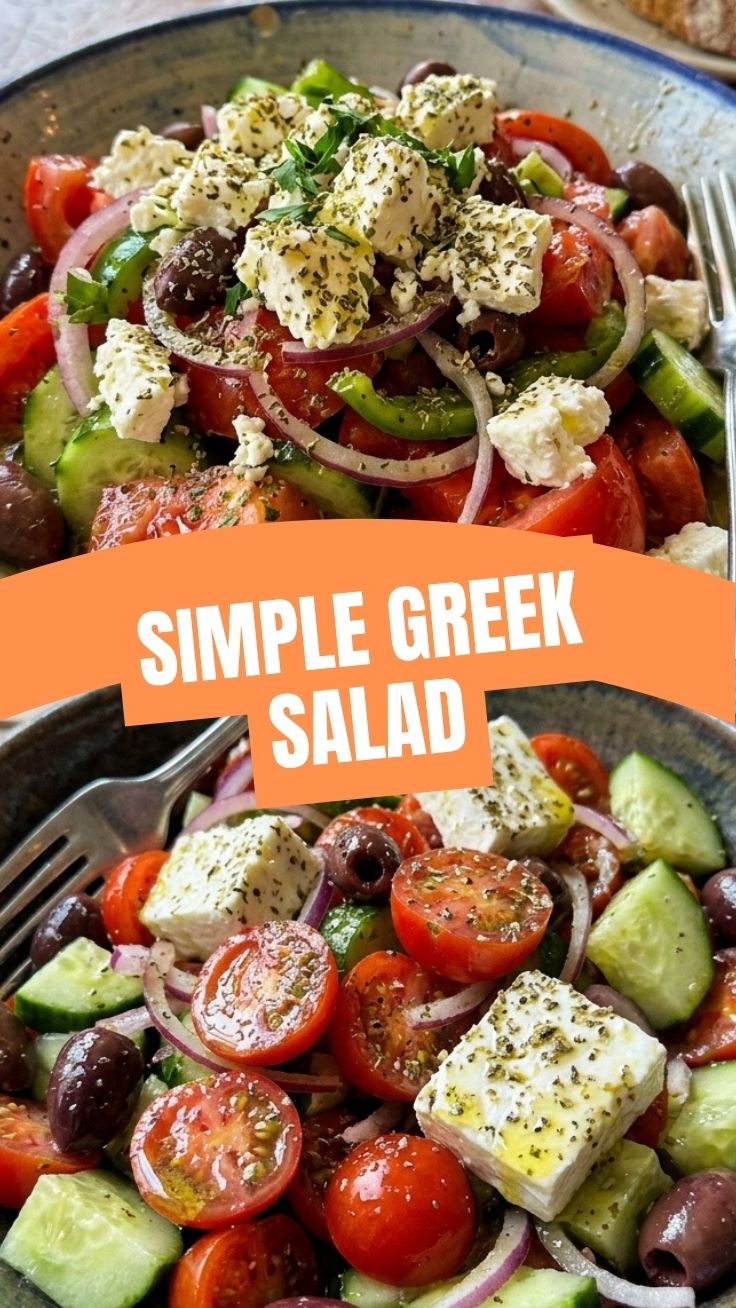
This amazing Greek Salad is a dream for busy cooks, requiring absolutely no cooking!
- Prep Time: 15 minutes
- Resting Time (Optional but Recommended): 10-15 minutes (allows flavors to meld)
You can easily prepare all the vegetables and dressing ahead of time and store them separately. Combine right before serving to maintain optimal crispness. This minimalist approach makes it a fantastic last-minute dish or a perfect make-ahead component for your weekly meal prep.
Step-by-Step Instructions
1. Prepare the Vegetables: On a clean cutting board, dice the tomatoes, cucumber, and green bell pepper into roughly 1-inch pieces. Thinly slice the red onion. Remember, uniform cuts ensure even flavoring.
2. Combine in a Large Bowl: Gently place all the prepared vegetables, along with the pitted Kalamata olives, into a large mixing bowl.
3. Make the Dressing: In a separate small bowl, whisk together the extra virgin olive oil, red wine vinegar, fresh oregano (or dried), a pinch of salt, and a few grinds of black pepper. Taste and adjust seasoning as needed – remember the feta and olives are salty.
4. Dress the Salad: Pour the dressing over the vegetables. Toss gently to coat all the ingredients. Avoid over-mixing to prevent bruising the vegetables.
5. Add the Feta: Crumble or cube the feta cheese directly over the dressed salad. This is a crucial step for achieving the authentic Greek Salad experience, as the feta’s creaminess beautifully complements the crisp vegetables.
6. Optional Resting Time: For an even deeper flavor, let the salad rest at room temperature for 10-15 minutes before serving. This allows the dressing to permeate the vegetables.
7. Serve: Serve immediately as a refreshing side dish or a light main course. This vibrant Mediterranean Salad is best enjoyed fresh.
Nutritional Benefits & Advantages
The Greek Salad is a powerhouse of nutrition! It’s naturally gluten-free and packed with vitamins and antioxidants from the fresh produce. Tomatoes are rich in lycopene, cucumbers offer hydration, and bell peppers are an excellent source of Vitamin C. Kalamata olives contribute healthy monounsaturated fats and essential minerals, while feta cheese provides calcium and protein. The extra virgin olive oil, a cornerstone of the Mediterranean diet, is renowned for its heart-healthy benefits. This salad is a delicious way to boost your vegetable intake and enjoy a light yet satisfying meal.
Tips, Variations & Cooking Advice
- Toasting Oregano: Briefly warm dried oregano in a dry pan for 30 seconds before adding to the dressing to intensify its flavor.
- Add Protein: Transform this into a hearty main by adding grilled chicken, shrimp, chickpeas (Mediterranean Salad with chickpeas adds a fantastic twist!), or even a hard-boiled egg.
- Spice It Up: A pinch of red pepper flakes in the dressing can add a subtle kick.
- Herb Variations: While oregano is traditional, a sprinkle of fresh mint or parsley can offer an interesting aromatic variation.
- Lemon Zest: For a brighter dressing, add a teaspoon of finely grated lemon zest.
- Dietary Adaptations: For a dairy-free version, omit the feta or use a plant-based feta alternative.
Common Mistakes to Avoid
- Over-dressing: Start with less dressing and add more if needed. A soggy salad is rarely enjoyable.
- Using pre-crumbled feta: While convenient, block feta is usually far superior in taste and texture.
- Over-salting: Remember the olives and feta are already salty. Taste the dressing before adding too much salt.
- Mixing too early: If prepping ahead, keep the dressing separate and add just before serving to maintain vegetable crispness.
Storage & Meal Prep Tips
For optimal freshness, it’s best to prepare the Greek Salad right before serving. If you must prep ahead, store the chopped vegetables and dressing in separate airtight containers in the refrigerator. The dressing will keep for up to 5 days, and the chopped vegetables for 2-3 days. Combine just before eating. Leftovers, once dressed, are best consumed within a day, as the vegetables can become watery and soft. Do not freeze this salad, as the high water content of the vegetables will lead to a mushy texture upon thawing.
Conclusion
Crafting an authentic Greek Salad at home is not just about following a recipe; it’s about embracing the simplicity and freshness of Mediterranean cuisine. By selecting quality ingredients and following these straightforward steps, you can consistently achieve a vibrant, flavorful, and incredibly satisfying dish. Whether you’re seeking a refreshing side or a light, healthy meal, this Mediterranean Salad delivers every time. We encourage you to try this recipe, experiment with the suggested variations, and share your delicious results! Explore more delightful recipes from our blog to continue your culinary journey.
FAQs
Q1: Can I make the dressing in a larger batch?
A1: Yes, you can double or triple the dressing recipe and store it in an airtight jar in the refrigerator for up to a week. Just give it a good shake before using.
Q2: What’s the best type of cucumber to use?
A2: English or Persian cucumbers are ideal as they have fewer seeds and a thinner skin, making them less watery and easier to enjoy.
Q3: How can I prevent the red onion from being too strong?
A3: After thinly slicing the red onion, you can soak it in a bowl of ice water for 10-15 minutes. This process helps to mellow its pungent flavor without sacrificing its crunch.
Q4: Can I add other vegetables to a Mediterranean Salad?
A4: While a traditional Greek Salad has specific components, a general Mediterranean Salad can certainly incorporate other vegetables like artichoke hearts, sun-dried tomatoes, or even roasted zucchini for added flavor and texture.